Contemplation
– John Carpenter
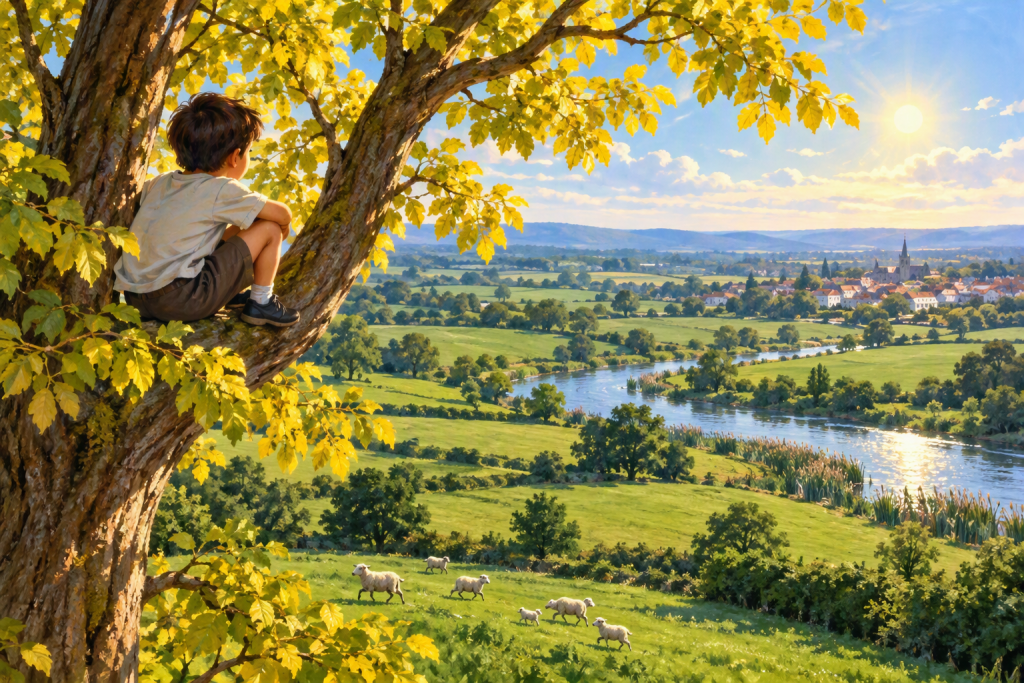
For days and days I’ve climbed a tree
A dappled yellow tree
And gazed abroad at many things
I’ve always wished to see.
I see the green and gentle fields
All bounded in with hedge
And shining rivers swimming through
The rushes on the edge,
And little sheep who play all day
I watch them as they run,
While far away the roofs of town
Are shining in the sun.
I think it’s very nice to sit
So high and look so far—-
How very large the world can be!
How many things there are!
Contemplation
– John Carpenter
বাংলা অনুবাদ (লাইন বাই লাইন)
For days and days I’ve climbed a tree
অনেক দিন ধরে আমি একটি গাছে উঠেছি,
A dappled yellow tree
একটি হলুদ রঙের ছোপছাপ পাতাওয়ালা গাছে,
And gazed abroad at many things
এবং দূর-দূরান্তের অনেক কিছু দেখেছি
I’ve always wished to see.
যা আমি সবসময় দেখতে চেয়েছি।
I see the green and gentle fields
আমি দেখি সবুজ ও শান্ত মাঠগুলো,
All bounded in with hedge
যেগুলো চারদিকে ঝোপঝাড়ের বেড়া দিয়ে ঘেরা,
And shining rivers swimming through
আর ঝলমলে নদীগুলো বয়ে যাচ্ছে তার মাঝখান দিয়ে,
The rushes on the edge,
তীরের ধারের নলখাগড়ার পাশ ঘেঁষে।
And little sheep who play all day
আর ছোট ছোট ভেড়াগুলো যারা সারাদিন খেলাধুলা করে,
I watch them as they run,
তাদের দৌড়াতে আমি দেখি,
While far away the roofs of town
আর অনেক দূরে শহরের ছাদগুলো
Are shining in the sun.
সূর্যের আলোয় ঝকঝক করছে।
I think it’s very nice to sit
আমার মনে হয় বসে থাকা খুবই সুন্দর,
So high and look so far—-
এত উঁচুতে উঠে এত দূর পর্যন্ত তাকিয়ে থাকা,
How very large the world can be!
পৃথিবী কত বিশাল হতে পারে!
How many things there are!
আর এখানে কত কিছু দেখার আছে!
Explain each stanza briefly
Stanza 1
For days and days I’ve climbed a tree… I’ve always wished to see.
The poet says that he has been climbing a yellow tree for many days. From the top of the tree, he looks around and enjoys seeing many beautiful things that he has always wanted to see. This stanza shows the poet’s curiosity and love for nature.
বাংলা:
কবি অনেক দিন ধরে একটি হলুদ গাছে উঠছেন। গাছের ওপর থেকে তিনি চারপাশের সুন্দর দৃশ্য দেখছেন, যেগুলো তিনি সবসময় দেখতে চেয়েছিলেন। এই স্তবকে প্রকৃতির প্রতি কবির আগ্রহ ও কৌতূহল প্রকাশ পেয়েছে।
Stanza 2
I see the green and gentle fields… Are shining in the sun.
From the tree, the poet sees green fields, shining rivers, and small sheep playing happily all day. He also notices the roofs of a distant town sparkling in the sunlight. This stanza paints a beautiful picture of the countryside and its peaceful scenery.
বাংলা:
গাছের ওপর থেকে কবি সবুজ মাঠ, ঝলমলে নদী এবং সারাদিন খেলায় মেতে থাকা ছোট ছোট ভেড়া দেখতে পান। দূরের শহরের ছাদগুলোও সূর্যের আলোয় ঝকঝক করছে। এই স্তবকটি গ্রামের শান্ত ও মনোরম প্রাকৃতিক দৃশ্য তুলে ধরেছে।
Stanza 3
I think it’s very nice to sit… How many things there are!
The poet feels happy sitting high up in the tree and looking far away. He realizes how large the world is and how many wonderful things it contains. This stanza expresses the poet’s sense of wonder and admiration for the beauty and vastness of the world.
বাংলা:
কবি গাছের উঁচু ডালে বসে দূর পর্যন্ত তাকিয়ে খুব আনন্দ পান। তিনি উপলব্ধি করেন যে পৃথিবী কত বিশাল এবং এতে কত কিছু দেখার ও জানার আছে। এই স্তবকে পৃথিবীর সৌন্দর্য ও বিস্ময়ের প্রতি কবির মুগ্ধতা প্রকাশ পেয়েছে।
Summary of the Poem Contemplation
English:
In the poem Contemplation, the poet climbs a yellow tree and enjoys observing the beautiful world around him. From the top of the tree, he sees green fields, shining rivers, playful sheep, and the distant town glowing in the sunlight. Looking at these lovely sights makes him realize how vast and wonderful the world is. The poem expresses the poet’s love for nature, his curiosity, and his sense of wonder at the beauty of the world.
বাংলা:
Contemplation কবিতায় কবি একটি হলুদ গাছে উঠে চারপাশের সুন্দর পৃথিবীকে উপভোগ করেন। গাছের চূড়া থেকে তিনি সবুজ মাঠ, ঝলমলে নদী, খেলাধুলায় মগ্ন ভেড়া এবং দূরের শহরের সূর্যালোকে ঝকঝকে ছাদ দেখতে পান। এই মনোরম দৃশ্যগুলো দেখে তিনি উপলব্ধি করেন যে পৃথিবী কত বিশাল ও বিস্ময়কর। কবিতাটি প্রকৃতির প্রতি কবির ভালোবাসা, কৌতূহল এবং পৃথিবীর সৌন্দর্যে তাঁর মুগ্ধতাকে প্রকাশ করেছে।
Theme of the Poem Contemplation
English:
The main theme of the poem Contemplation is the beauty and vastness of nature. By sitting high in a tree and observing the world around him, the poet discovers how wonderful and large the world is. The poem also highlights curiosity, appreciation of nature, and the joy of peaceful observation. It encourages readers to admire the natural world and to find happiness in simple things.
বাংলা:
Contemplation কবিতার মূল প্রতিপাদ্য হলো প্রকৃতির সৌন্দর্য ও পৃথিবীর বিশালতা। গাছের উঁচু ডালে বসে চারপাশের দৃশ্য দেখতে দেখতে কবি উপলব্ধি করেন যে পৃথিবী কত সুন্দর এবং বিস্তৃত। কবিতাটি প্রকৃতির প্রতি ভালোবাসা, কৌতূহল এবং শান্তভাবে প্রকৃতিকে উপভোগ করার আনন্দ প্রকাশ করে। এটি আমাদের প্রকৃতির সৌন্দর্যকে উপলব্ধি করতে এবং সাধারণ জিনিসের মধ্যেও আনন্দ খুঁজে নিতে উৎসাহিত করে।
Questions from English for Today
1. Where do you think the tree was?
I think the tree was in the countryside, near green fields, rivers, and sheep.
2. What were the four things the poet could see from the tree?
The poet could see:
- Green fields
- Shining rivers
- Little sheep playing all day
- The roofs of a distant town shining in the sun
3. Have you ever climbed a tree? If yes, what did you do it for? If not, why?
Yes, I have climbed a tree. I climbed it to enjoy the view around me and to pick some fruits.
Or
No, I have never climbed a tree because it can be dangerous and I am afraid of falling.
More questions for practice
1. Q: Who is the poet of the poem Contemplation?
A: John Carpenter is the poet of the poem.
2. Q: What did the poet climb for many days?
A: The poet climbed a tree for many days.
3. Q: What color was the tree?
A: The tree was yellow.
4. Q: Where did the poet sit?
A: The poet sat high in a tree.
5. Q: What did the poet enjoy doing from the tree?
A: He enjoyed looking at the world around him.
6. Q: Why did the poet gaze abroad?
A: He gazed abroad to see things he had always wished to see.
7. Q: What kind of fields did the poet see?
A: The poet saw green and gentle fields.
8. Q: What surrounded the fields?
A: Hedges surrounded the fields.
9. Q: What flowed through the fields?
A: Shining rivers flowed through the fields.
10. Q: Where were the rushes located?
A: The rushes were on the river’s edge.
11. Q: What animals did the poet see?
A: He saw little sheep.
12. Q: What were the sheep doing?
A: The sheep were playing all day.
13. Q: How did the poet watch the sheep?
A: He watched them as they ran.
14. Q: What could be seen far away?
A: The roofs of a town could be seen far away.
15. Q: Why were the roofs shining?
A: They were shining in the sunlight.
16. Q: How did the poet feel while sitting in the tree?
A: He felt happy and pleased.
17. Q: What helped the poet see far away?
A: Sitting high in the tree helped him see far away.
18. Q: What did the poet learn about the world?
A: He learned that the world is very large.
19. Q: What filled the poet with wonder?
A: The many sights around him filled him with wonder.
20. Q: What is the setting of the poem?
A: The setting is a peaceful countryside.
21. Q: What season might the poem describe?
A: It may describe spring or summer.
22. Q: Is the poem about a city or a village?
A: It is mainly about the countryside.
23. Q: What shines through the fields?
A: Rivers shine through the fields.
24. Q: What does the poet admire most?
A: The beauty of nature.
25. Q: What is the mood of the poem?
A: The mood is peaceful and joyful.
26. Q: What does the poet see from above?
A: He sees fields, rivers, sheep, and a town.
27. Q: Why is the tree important in the poem?
A: It gives the poet a good view of the surroundings.
28. Q: Does the poet enjoy nature?
A: Yes, he enjoys nature very much.
29. Q: What is the poet doing while sitting in the tree?
A: He is observing the world.
30. Q: What can we learn from the poet’s actions?
A: We can learn to appreciate nature.
31. Q: How are the fields described?
A: They are described as green and gentle.
32. Q: What does the word “gazed” mean?
A: It means looked carefully for a long time.
33. Q: What does the poet use to explore nature?
A: He uses a tree as his lookout point.
34. Q: Why are the sheep important in the poem?
A: They add life and joy to the scene.
35. Q: How does the countryside appear?
A: It appears calm and beautiful.
36. Q: What is reflected in the shining river?
A: Sunlight is reflected in the river.
37. Q: How do the sheep spend their day?
A: They spend their day playing and running.
38. Q: What is the poet’s viewpoint?
A: His viewpoint is from the top of a tree.
39. Q: Why can the poet see many things?
A: Because he is sitting high above the ground.
40. Q: What feeling does the poem create?
A: It creates a feeling of peace and wonder.
41. Q: What does the poet think about sitting high?
A: He thinks it is very nice.
42. Q: What does the poet admire from far away?
A: The shining roofs of the town.
43. Q: What natural feature appears in the poem?
A: A river appears in the poem.
44. Q: What man-made feature appears in the poem?
A: The town appears in the poem.
45. Q: What gives light to the scene?
A: The sun gives light to the scene.
46. Q: How does the poet spend his time?
A: He spends time observing nature.
47. Q: What does the poet notice on the riverbanks?
A: He notices rushes.
48. Q: What does the word “abroad” mean in the poem?
A: It means around or far and wide.
49. Q: Is the poet alone in the tree?
A: Yes, he appears to be alone.
50. Q: What does the tree symbolize?
A: It symbolizes exploration and observation.
51. Q: Why does the poet climb repeatedly?
A: He enjoys the beautiful view.
52. Q: What is the poet’s attitude toward nature?
A: He is appreciative and curious.
53. Q: What can be inferred about the poet?
A: He loves observing nature.
54. Q: What makes the world seem large to the poet?
A: Seeing far distances from the tree.
55. Q: What does the poet find fascinating?
A: The many things in the world.
56. Q: How are the town roofs described?
A: They are shining in the sun.
57. Q: Are the sheep near or far from the poet?
A: They seem relatively near.
58. Q: What does the poem encourage readers to do?
A: Appreciate nature’s beauty.
59. Q: What type of poem is Contemplation?
A: It is a nature poem.
60. Q: What is the central idea of the poem?
A: The beauty and vastness of nature.
61. Q: Which word describes the fields?
A: Gentle.
62. Q: Which word describes the rivers?
A: Shining.
63. Q: Which word describes the sheep?
A: Little.
64. Q: What color dominates the natural scenery?
A: Green.
65. Q: What provides a broad view of nature?
A: The tree.
66. Q: Why do the roofs shine?
A: Because sunlight falls on them.
67. Q: Does the poet enjoy being outdoors?
A: Yes, he does.
68. Q: How does nature affect the poet?
A: It makes him happy.
69. Q: What does the poet think of the world?
A: He thinks it is large and interesting.
70. Q: What is the poet’s favorite activity in the poem?
A: Watching nature from a tree.
71. Q: Is the scenery lively or dull?
A: It is lively.
72. Q: Why is the river beautiful?
A: It shines brightly.
73. Q: What makes the countryside peaceful?
A: Fields, rivers, and sheep.
74. Q: What does the poet observe carefully?
A: The surrounding landscape.
75. Q: What can children learn from the poem?
A: To enjoy and value nature.
76. Q: What kind of place is described in the poem?
A: A quiet rural place.
77. Q: What helps the poet understand the world better?
A: Observing it carefully.
78. Q: Why are the fields bounded with hedges?
A: To mark their boundaries.
79. Q: What is visible on a sunny day?
A: The shining town roofs.
80. Q: What does the poet use instead of technology to explore?
A: A tree and his eyes.
81. Q: What catches the poet’s attention most?
A: The beauty of nature.
82. Q: What does the poet do while sitting still?
A: He observes and thinks.
83. Q: What is one sign of life in the poem?
A: The running sheep.
84. Q: Why is the poem enjoyable to read?
A: It paints a beautiful picture of nature.
85. Q: What feeling does the ending express?
A: Wonder and amazement.
86. Q: What does the poet realize at the end?
A: The world is very large.
87. Q: What amazes the poet about the world?
A: The number of things in it.
88. Q: How does height help the poet?
A: It gives him a wider view.
89. Q: What is the tone of the poem?
A: Cheerful and reflective.
90. Q: What natural color is emphasized?
A: Green.
91. Q: Why does the poet watch the sheep?
A: Because they are playful and interesting.
92. Q: What does contemplation mean?
A: Deep thought or quiet observation.
93. Q: Is the poet active or thoughtful in the poem?
A: He is thoughtful.
94. Q: What does the poet appreciate while sitting alone?
A: Nature’s beauty.
95. Q: What is one important message of the poem?
A: Nature is full of wonder.
96. Q: What makes the poet feel excited?
A: Discovering many beautiful sights.
97. Q: How does the poem end?
A: With the poet expressing wonder at the size of the world.
98. Q: What does the poet’s high position symbolize?
A: A broader understanding of the world.
99. Q: Why is the poem called Contemplation?
A: Because the poet quietly observes and thinks about the world.
100. Q: What is the best lesson from the poem?
A: We should appreciate nature and be curious about the world around us.