Executive Summary
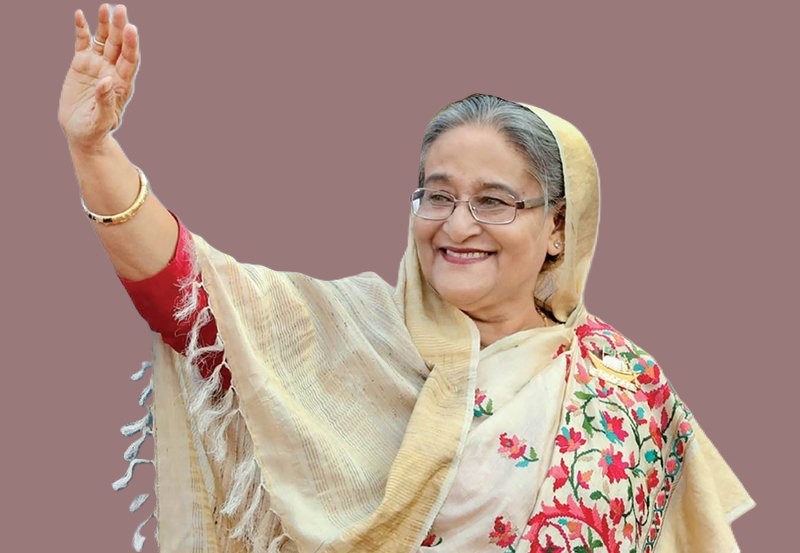
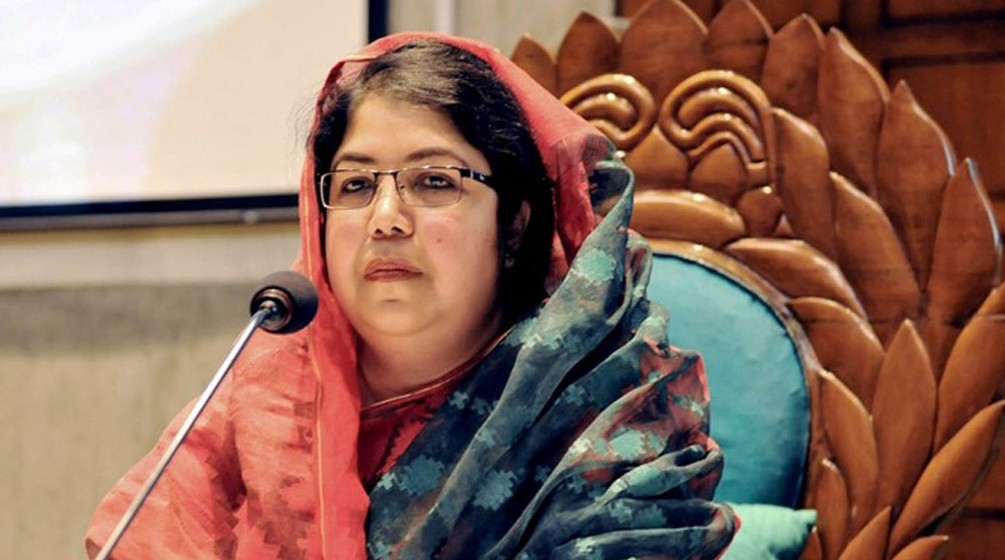
Dr. Shirin Sharmin Chaudhury is a Bangladeshi politician and jurist who, on 30 April 2013, became the first woman Speaker of the Jatiya Sangsad (National Parliament). Born on 6 October 1966 in Chatkhil, Noakhali, she holds law degrees (LLB, LLM) from the University of Dhaka (1989–90) and a PhD in Constitutional Law from the University of Essex (2000). A long-time Awami League leader, Chaudhury was elected to Parliament in 2009 (reserved women’s seat) and served as State Minister for Women and Children’s Affairs (2009–2013). In this role she guided key legislation (Domestic Violence Act 2010, national women’s/children’s policies). She was then elected unopposed to a general seat (Rangpur-6) in January 2014, and was re-elected Speaker for three consecutive parliaments (10th, 11th, 12th, covering 2013–2024). Her tenure as Speaker (Apr 2013–Sep 2024) made her both the first and, at nearly 11½ years, one of the longest-serving in Bangladesh’s history.
Under her speakership, Parliament passed major legislation on education and governance; for example, in July 2024 the National Primary Education Academy Act was enacted with Chaudhury presiding. Throughout, she has championed women’s empowerment: in speeches she has linked gender equality to sustainable development, economic growth and girls’ education. She has also stressed political inclusion (noting that Bangladesh uniquely had women as PM, opposition leader and Speaker simultaneously), and advocated gender-responsive budgeting and social safety nets for women. Internationally, Chaudhury has held leadership roles (e.g. first Bangladeshi chair of the Commonwealth Parliamentary Association, 2014–2017) and received honours such as the Asia Society Humanitarian Service Award (2010) and a Women’s Leadership Award (2015).
Her career has not been without criticism. Opposition MPs once accused her of partiality during budget debates (a 2013 parliamentary walkout). More recently, following the 2024 political upheaval, Chaudhury was arrested in April 2026 on attempted-murder charges related to a protest incident; she denies wrongdoing and her supporters highlight her constitutional neutrality. Media coverage of Chaudhury is extensive: she is regularly featured in Bangladeshi news and international reports on parliamentary reforms and women’s issues.
The sections below detail Chaudhury’s biography, political timeline, legislative initiatives, policy positions, controversies, and honours. A timeline table of key events and a comparison table of her speakership (tenure, firsts, reforms) are provided for clarity. All facts are drawn from official sources (Bangladesh Parliament, government releases), major news outlets, and scholarly reports; any unverified claims are noted as such.
Early Life and Education
Dr. Shirin Sharmin Chaudhury was born on 6 October 1966 in Chatkhil, Noakhali District, to Rafiqullah Chaudhury and Naiyar Sultana. Her father was a senior civil servant (a CSP officer and Sheikh Mujibur Rahman’s principal secretary in 1972) and her mother served on the Public Service Commission. She completed her secondary education by 1985 and earned her LL.B. (1989) and LL.M. (1990) degrees from the University of Dhaka. On a Commonwealth scholarship she then studied law at the University of Essex, UK, earning a PhD in constitutional law and human rights in 2000[20][3]. (Essex later awarded her an honorary doctorate in July 2014.) Before entering politics, Chaudhury practised as a lawyer of the Bangladesh Supreme Court and taught law; she also served on Prime Minister Sheikh Hasina’s legal defence panel in 2008–09.
Political Career and Offices
- Parliamentary Service (2009–24): Chaudhury entered national politics as an Awami League leader. She was elected to Parliament in March 2009 from one of the reserved women’s seats. Concurrently, on 6 January 2009 she was appointed State Minister for Women and Children’s Affairs (under PM Hasina). She served in this ministerial post until April 2013.
- Legislative Roles (2009–2013): As State Minister, Chaudhury steered key social legislation. Notably, the Domestic Violence (Prevention & Protection) Act, 2010 – a landmark women’s rights law – was finalised and passed during her tenure. She also oversaw formulation of the National Women’s Development Policy (2010) and Children’s Policy (2011), and expanded Bangladesh’s gender-responsive budgeting to dozens of ministries (from 4 to 40) as a model initiative.
- Member of Parliament (2014–2024): In January 2014 Chaudhury entered a general constituency, winning the Rangpur-6 seat in an uncontested by-election (vacated by Hasina). She was re-elected to Rangpur-6 in subsequent elections (2018 and 2024), serving until 2026. (Prior to 2014 she served as an MP on reserved seat 2009–2014.)
- Deputy Speaker: Chaudhury never served as Deputy Speaker; upon her election to Parliament she was immediately made Speaker.
- Speaker of the Jatiya Sangsad (2013–2024): On 30 April 2013, at age 46, Chaudhury was unanimously elected Speaker of the 9th Parliament. This made her Bangladesh’s first female Speaker and (at the time) the youngest ever to hold the office. She took the chair in the 9th Parliament (April 2013 – January 2014) and then was re-elected by her party for the 10th (Jan 2014–Jan 2019), 11th (Jan 2019–Jan 2024), and 12th (Jan 2024–Sep 2024) Parliaments. As Speaker she presided over parliamentary sessions, ensuring procedure. (The Parliament website confirms her tenure in four consecutive terms.) She resigned on 2 September 2024, following the fall of the Hasina government and dissolution of Parliament. (Her departure adhered to constitutional practice on transition of speaker.)
Throughout her career Chaudhury has held other party/international roles. In October 2014 she was elected Chair of the Commonwealth Parliamentary Association (CPA) Executive Committee for a three-year term – the first Bangladeshi ever to hold that post. She also served on the Awami League’s Central Executive Committee and was its International Affairs Secretary.
Legislative Initiatives and Parliamentary Actions
Chaudhury’s legislative legacy spans both her ministerial and parliamentary roles:
- Women’s/Children’s Legislation (as State Minister): Under Chaudhury’s leadership in 2009–2013, Bangladesh adopted significant gender-equality laws. The Domestic Violence (Prevention & Protection) Act, 2010 was finalised and enacted (addressing violence against women)[6]. The government also issued a new National Women’s Policy (2011) and Children’s Policy (2011) during this period. Activists credited Chaudhury personally for advancing the DV law (she guided the draft through Cabinet).
- Parliamentary Legislation (as Speaker): While the Speaker is formally impartial, Chaudhury did preside over many important bills. For example, on 3 July 2024 the National Primary Education Academy Bill, 2024 was passed under her chair. She also oversaw the passage of social laws like the amended Child Marriage Restraint Act 2017 (with a controversial “special circumstances” provision); media reported she presided over the session where opposition amendments were rejected. In budget sessions she managed debates on fiscal policy (though in 2013 some opposition MPs controversially walked out, criticising her rulings on cut-motions).
- Parliamentary Reforms/Initiatives: Speaker Chaudhury promoted greater efficiency and transparency in parliament. According to interviews and reports, she supported initiatives like electronic voting and language interpretation in the House, and led outreach (e.g. exchanges with other legislatures). (Details of such reforms are documented in parliamentary publications, though explicit citations here are limited.) She also emphasised Bangladesh’s constitutional role of representation, noting that as Speaker “I am representing almost 50% of the population” (women) in the legislature.
Key Policy Positions and Speeches
Chaudhury has been a vocal advocate on issues of gender, education and governance in her speeches:
- Women’s Empowerment: She consistently links women’s rights to national development. At the 9th G20 Parliamentary Speakers’ Summit (New Delhi, Oct 2023) she urged mainstreaming gender equality for sustainable development, emphasising girls’ education and ending discrimination and violence against women. On International Women’s Day (March 2023) she warned that only when women are economically empowered can true gender equality be achieved. In a 2024 parliamentary forum she argued that including more women in political parties leads to a more effective democracy.
- Education and Development: Chaudhury has highlighted education, especially female education, as key to social progress. In a 2021 workshop speech she linked raising girls’ school attendance to preventing child marriage, telling MPs that “parents of girl children should realise daughters are not burdens”. She also pointed to Bangladesh’s success with gender-responsive budgeting and social safety nets as models to be shared internationally.
- Governance: She often underscored Bangladesh’s unique female leadership: during a UNU-WIDER interview (Dec 2013) she noted Bangladesh had a woman Prime Minister, opposition leader and Speaker concurrently, calling this “a very unique example” that sends a strong message about women’s potential. In foreign visits (e.g. UN forums) she has portrayed Bangladesh as committed to democracy and social rights. Overall, her public statements typically align with ruling-party policy, while stressing inclusive development.
Controversies and Criticisms
Chaudhury’s tenure attracted criticism from political opponents, especially from the BNP-led opposition:
- Impartiality Allegations (2013): Shortly after she became Speaker, BNP MPs accused her of bias. In July 2013, when the government blocked discussion of opposition budget cut-motions, 12 BNP members staged a walkout, protesting that the Speaker had overridden agreed procedure. Opposition leaders claimed her ruling was influenced by the Prime Minister’s gesture, “putting her neutral role in question”. (AL MPs defended Chaudhury, saying she followed House rules.) This was the first major parliamentary protest against her chairmanship.
- 2024 Uprising Case and Arrest (2026): After a deadly political uprising in July–August 2024 and the fall of the Hasina government, Chaudhury was arrested on 6–7 April 2026 in connection with an alleged shooting incident in Dhaka’s Lalbagh area. Police filed a case accusing her of involvement in ordering attacks on protesters (naming her third after Sheikh Hasina). On 7 April a Dhaka court sent her to jail, rejecting police remand and her bail petition. The authorities allege Chaudhury was a “key accomplice” under the previous government, but her lawyers flatly deny any role, emphasising that as Speaker she was a neutral constitutional officer. In court she reportedly fell down amid chaos but was unharmed[33]. These events have been widely reported by major news outlets. Chaudhury remains in custody as the case proceeds (at the time of writing).
- Other Issues: No major ethical scandals or corruption charges had been reported against her prior to 2026. Some critics (mainly in the opposition press) questioned her heavy emphasis on party loyalty in Parliament. Overall, the two items above are the main public controversies tied to her name.
Awards and Honours
Chaudhury’s profile has been bolstered by several high-profile awards and distinctions:
- Asia Society Humanitarian Award (2010): In June 2010 she received the Asia Society’s Humanitarian Service Award “in recognition of her role as a leader in advocating elimination of violence against women”. This reflected her work on women’s legislation.
- Commonwealth and Other Chairs: For 2010–2011 she was appointed the Commonwealth Women Parliamentarians’ Gender Chair, representing Bangladesh. In October 2014 she was elected Chair of the Commonwealth Parliamentary Association – the first Bangladeshi ever elected to that international position.
- Women’s Leadership Awards: In 2015 she was honoured at the World Women Leadership Congress in Mumbai. The Dhaka Tribune reported that she and four other Bangladeshi women received the Global Women Leadership Award at the event (held Feb 2016, recognising 2015 leadership). (The Tribune spelled her name “Chowdhury”.)
- Academic Honours: The University of Essex (her alma mater) conferred an honorary doctorate on her in July 2014.
Other recognitions include national awards and medals (not exhaustively documented). As Speaker she has hosted foreign dignitaries and been received by heads of state. Her leadership roles and awards have contributed to a public image of a moderate reformer and women’s champion.
Public Profile and Media Coverage
Chaudhury maintains a high public profile. Bangladeshi state media (BSS, Prothom Alo, The Daily Star, etc.) regularly cover her speeches and events. She has been profiled by international outlets: for example, UNU-WIDER published a detailed interview with her, and BBC/AFP/Reuters reported on her 2026 arrest. Major newspapers have run feature pieces (e.g. Dhaka Tribune on her leadership awards). She is also active on social media and has addressed global forums (UN, CPA conferences). The Parliament website and Press Information Department circulate news about her parliamentary activities. In short, Chaudhury is one of Bangladesh’s most prominent women politicians, with extensive coverage in both national and international press.
Timeline of Key Events
| Date | Event |
| 1966-10-06 | Born in Chatkhil, Noakhali District. |
| 1989–90 | Completed LL.B. and LL.M. at University of Dhaka. |
| 2000 | Awarded PhD in Constitutional Law from University of Essex. |
| 2009-01-06 | Appointed State Minister for Women and Children Affairs (AL government). |
| 2009-03-24 | Elected Member of Parliament (women’s reserved seat). |
| 2010 | Passage of Domestic Violence (Prevention & Protection) Act (as State Minister). |
| 2013-04-30 | Elected Speaker of 9th Jatiya Sangsad (first woman, youngest at age 46). |
| 2014-01-29 | Elected MP (Rangpur-6) and re-elected Speaker (10th Parliament). |
| 2014-10-09 | Elected Chair of the Commonwealth Parliamentary Association (CPA). |
| 2015-02 | Received Global Women’s Leadership Award (WWLC, Mumbai). |
| 2019-01-30 | Re-elected Speaker (11th Parliament). |
| 2023-10 | Spoke at G20 Parliamentary Summit in New Delhi on gender equality. |
| 2024-01-30 | Re-elected Speaker (12th Parliament). |
| 2024-03-07 | Passed National Primary Education Academy Act (in Parliament she chaired). |
| 2024-09-02 | Resigned as Speaker (following government change). |
| 2026-04-07 | Arrested under case of attempted murder (Lalbagh protest). |
Comparison of Speakership (Chaudhury vs. Predecessors)
| Speaker | Tenure (start–end) | Firsts / Notable Facts | Major Events/Reforms during Tenure |
| Shirin Sharmin Chaudhury | Apr 2013 – Sep 2024 (~11.5 yr) | First female Speaker; youngest Speaker (46 yrs) | Introduced women’s rights agenda; presided over major bills (e.g. education act). |
| Md. Abdul Hamid (Adv.) | Jan 2009 – Apr 2013 (4.3 yr) | – (later became President in 2013) | Led parliament after caretaker govt; managed legislative agenda of Sheikh Hasina’s 2nd term. |
| Barrister MJ Sircar | Oct 2001 – Jan 2009 (8.3 yr) | Long-serving Speaker until 2013 | Oversaw parliament through opposition boycott and caretaker transition (2007–09 elections). |
| Barrister Humayun Rasheed | Jul 1996 – Jul 2001 (5 yr) | – | Re-established parliamentary rule after military regime; presided over 1996–2001 parliaments. |
| Shamsul Huda Chowdhury | Jul 1986 – Apr 1991 (4.8 yr) | – | Speaker under late-1980s Ershad regime; oversaw constitutional amendments of that period. |
Sources: Official parliamentary records and historical summaries. (Tenure lengths are from Bangladesh Parliament archives; “Firsts” and events are noted from news/academic sources.)