Satellites, Sensors, and Signals: Why Space Technology Decides Modern Wars
Introduction: The Battlefield Above the Battlefield
Modern warfare is no longer decided solely by tanks crossing borders, fighter jets dominating skies, or warships controlling seas. Today, the most critical battlefield lies hundreds or even thousands of kilometers above Earth—in space. Satellites, orbital sensors, navigation systems, and communication networks now shape the outcome of conflicts before the first missile is fired.
The wars of the 21st century have revealed a dramatic transformation in military strategy. Nations that control information, surveillance, positioning systems, and secure communication networks gain overwhelming advantages over adversaries. Space technology has become the nervous system of modern armed forces. Without it, precision weapons lose accuracy, commanders lose visibility, drones become blind, and armies lose coordination.
From the Persian Gulf War to the Russia–Ukraine conflict, from anti-terrorism operations to cyber warfare, the importance of space-based systems has become undeniable. Intelligence satellites detect troop movements. Navigation satellites guide missiles with meter-level precision. Space-based communication systems allow troops to coordinate across continents. Electronic signals intercepted from orbit can reveal enemy plans before they are executed.
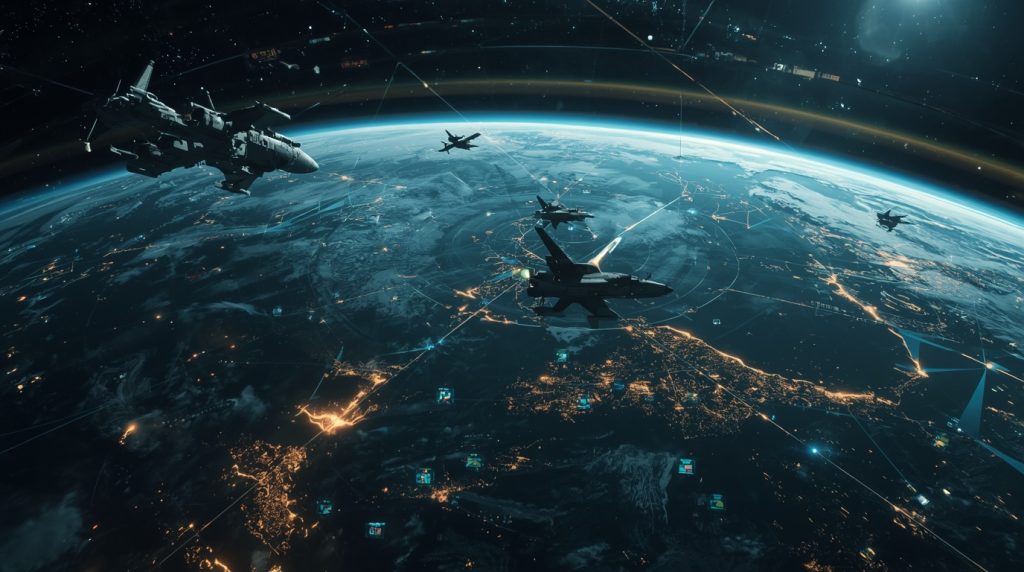
Military power is increasingly tied to orbital infrastructure.
This transformation has changed the global balance of power. Countries are racing to develop military satellites, anti-satellite weapons, cyber capabilities, and independent navigation systems. The United States, China, Russia, India, and European nations are investing billions into military space programs because they understand one reality: whoever controls space controls the modern battlefield.
Space is no longer a peaceful scientific frontier. It has become a strategic domain of warfare.
This blog explores how satellites, sensors, and signals shape modern wars, why space technology has become essential for military superiority, how recent conflicts demonstrate its importance, and what the future of space warfare may look like in the coming decades.
The Evolution of Warfare: From Ground Battles to Orbital Dominance
Ancient Warfare and Physical Strength
For thousands of years, wars were decided by manpower, terrain, weapons, and leadership. Ancient empires relied on infantry formations, cavalry charges, naval fleets, and fortifications. Communication was slow, intelligence gathering was limited, and commanders often fought blindly.
Victories depended on:
- Army size
- Weapon quality
- Tactical positioning
- Supply lines
- Leadership abilities
Information moved slowly. A king or general might wait days or weeks to receive updates from distant battlefields.
Industrial Warfare and Mechanization
The Industrial Revolution changed warfare dramatically. Railroads, telegraphs, machine guns, tanks, submarines, and aircraft accelerated military operations. During World War I and World War II, industrial capacity became central to victory.
Technological advancements allowed:
- Faster troop movement
- Long-range communication
- Strategic bombing
- Radar detection
- Naval coordination
Radar became especially important during World War II. It allowed nations like Britain to detect enemy aircraft before attacks occurred. Signals intelligence also emerged as a powerful tool, with codebreaking operations influencing the war’s outcome.
The Cold War and the Space Race
The Cold War introduced a new strategic arena: space.
After the Soviet Union launched Sputnik 1 Launch, military leaders immediately recognized the strategic potential of satellites.
Satellites could:
- Observe enemy territory
- Detect missile launches
- Enable global communication
- Guide nuclear forces
- Monitor troop deployments
The United States and the Soviet Union rapidly developed reconnaissance satellites during the Cold War. These systems transformed intelligence gathering.
Instead of relying solely on spies and aircraft, governments could monitor adversaries from orbit continuously.
The rise of satellite technology created a revolution in military awareness.
The Digital Age of Warfare
Today’s wars are fought in an environment dominated by data.
Modern militaries depend on:
- GPS navigation
- Real-time surveillance
- Secure communication
- Electronic warfare
- Artificial intelligence
- Cyber operations
- Satellite networks
The battlefield has become network-centric. Every military asset—soldiers, drones, aircraft, missiles, ships, and command centers—is connected through digital systems.
Space technology acts as the backbone of this network.
Without satellites, modern militaries would struggle to:
- Coordinate operations
- Identify targets
- Navigate terrain
- Communicate securely
- Launch precision attacks
The future of warfare is increasingly linked to orbital infrastructure and information dominance.
Satellites: The Eyes and Ears of Modern Militaries
What Military Satellites Do
Military satellites perform several essential functions:
- Surveillance and reconnaissance
- Navigation and positioning
- Communication
- Missile warning
- Weather monitoring
- Signals intelligence
- Electronic intelligence
Each category plays a unique role in warfare.
Reconnaissance Satellites
Reconnaissance satellites provide visual and infrared imagery of Earth’s surface.
They can:
- Monitor military bases
- Track troop movements
- Detect missile installations
- Observe naval fleets
- Identify infrastructure damage
Modern imaging satellites can capture extremely high-resolution images. Some systems can identify vehicles, aircraft, and even battlefield positions in near real time.
This capability gives militaries strategic awareness unmatched in previous eras.
Infrared Missile Detection Satellites
Missile warning satellites use infrared sensors to detect heat signatures from missile launches.
These systems are critical for:
- Nuclear deterrence
- Missile defense
- Early warning systems
A ballistic missile launch produces enormous heat during ignition. Infrared satellites can detect launches within seconds, providing governments with valuable response time.
Without these systems, nations would face catastrophic vulnerability.
Navigation Satellites
Satellite navigation systems guide:
- Missiles
- Aircraft
- Ships
- Ground vehicles
- Drones
- Soldiers
The American GPS system revolutionized warfare by enabling precision-guided munitions.
A missile that once missed targets by hundreds of meters can now strike within meters.
Other nations developed alternatives:
- Russia: GLONASS
- China: BeiDou
- Europe: Galileo
- India: NavIC
Navigation satellites are now central to military operations.
Military Communication Satellites
Communication satellites allow forces to coordinate globally.
Military commanders can:
- Transmit battlefield orders instantly
- Coordinate multinational operations
- Operate drones remotely
- Maintain secure battlefield communication
Modern warfare depends heavily on uninterrupted communication networks.
Destroying or disrupting communication satellites can cripple military operations.
The Role of Sensors in Modern Warfare
What Are Military Sensors?
Sensors gather data from the environment.
Modern military sensors can detect:
- Heat
- Motion
- Radio signals
- Radar emissions
- Infrared energy
- Electromagnetic activity
- Acoustic patterns
Sensors transform raw data into actionable intelligence.
Space-Based Sensors
Space-based sensors provide strategic advantages because satellites can observe large areas continuously.
They monitor:
- Borders
- Oceans
- Airspace
- Missile launches
- Enemy deployments
Unlike aircraft, satellites cannot easily be intercepted in orbit.
Synthetic Aperture Radar (SAR)
SAR satellites use radar instead of optical imaging.
Advantages include:
- Imaging through clouds
- Nighttime observation
- All-weather capability
SAR systems are extremely important during war because weather often limits conventional observation.
They can detect:
- Vehicle movement
- Trenches
- Infrastructure changes
- Naval activity
Infrared Sensors
Infrared sensors detect heat signatures.
They can identify:
- Missile launches
- Aircraft engines
- Tank movement
- Industrial activity
Thermal imaging provides battlefield awareness even at night.
Signals Intelligence (SIGINT)
Signals intelligence involves intercepting electronic communications and radar emissions.
SIGINT satellites can:
- Intercept radio transmissions
- Monitor radar networks
- Track communication activity
- Detect electronic warfare systems
Information dominance often determines victory before combat begins.
GPS and Precision Warfare
The Revolution of Precision Weapons
Before satellite-guided weapons, bombing campaigns often caused widespread destruction because targeting was inaccurate.
GPS changed this dramatically.
Precision-guided weapons can now:
- Strike individual buildings
- Eliminate command centers
- Destroy bridges selectively
- Reduce collateral damage
This changed military doctrine worldwide.
Smart Bombs and Guided Missiles
Modern precision weapons use:
- GPS guidance
- Laser targeting
- Inertial navigation
- Terrain mapping
Examples include:
- Cruise missiles
- Guided artillery
- Smart bombs
- Loitering munitions
Satellite navigation enables precise strikes from long distances.
Drone Warfare
Drones depend heavily on satellites.
Satellite systems provide:
- Navigation
- Communication
- Targeting
- Intelligence sharing
Long-range drones would be ineffective without space-based infrastructure.
Modern drone warfare represents a fusion of aerospace, AI, and orbital technology.
Communication Dominance: Winning the Information War
Why Communication Matters
Wars are chaotic. Commanders must coordinate:
- Troop movements
- Air support
- Naval operations
- Logistics
- Intelligence
Communication failures can cause defeat even when armies are strong.
Satellite Communication Systems
Military satellite communication systems enable:
- Secure communication
- Encrypted data transfer
- Global connectivity
- Real-time coordination
These systems support operations across continents.
Network-Centric Warfare
Modern militaries operate as interconnected digital networks.
This concept is called network-centric warfare.
Information flows between:
- Soldiers
- Command centers
- Aircraft
- Ships
- Drones
- Satellites
This creates a unified battlefield picture.
The military that processes information faster often wins.
Electronic Warfare
Electronic warfare involves disrupting enemy communication and sensors.
Tactics include:
- Jamming signals
- GPS spoofing
- Cyberattacks
- Radar interference
Electronic warfare can blind enemy forces without firing a shot.
Space Technology in Real Wars
The Gulf War: The First Space War
The 1991 Gulf War demonstrated the power of space-enabled warfare.
The United States used:
- GPS-guided weapons
- Reconnaissance satellites
- Secure satellite communication
- Precision targeting systems
This conflict showed how information superiority could overwhelm conventional forces.
The war became known as the “first space war.”
Afghanistan and Counterterrorism Operations
After the September 11 attacks, military operations in Afghanistan relied heavily on satellites.
Space systems supported:
- Drone strikes
- Surveillance missions
- Special operations
- Communication networks
Remote warfare became increasingly possible.
Iraq War and Precision Dominance
The Iraq War further demonstrated:
- Real-time battlefield awareness
- Satellite-guided airstrikes
- Advanced reconnaissance
- Coordinated digital warfare
Military planners used orbital data extensively.
Russia–Ukraine War
The Russia–Ukraine war has become one of the clearest examples of space technology’s importance.
Key factors include:
- Commercial satellite imagery
- Drone coordination
- GPS guidance
- Electronic warfare
- Satellite internet systems
Commercial companies now play strategic roles in warfare.
Satellite internet services helped maintain Ukrainian communication despite attacks on infrastructure.
Real-time imagery also exposed troop movements to the world.
This conflict demonstrated that civilian space infrastructure can influence military outcomes.
Commercial Space Companies and Warfare
The Rise of Private Space Power
Private companies increasingly influence global security.
Major firms now provide:
- Satellite internet
- Earth observation
- Launch services
- Communication systems
Governments rely on commercial providers for military operations.
Satellite Internet and Battlefield Connectivity
Satellite internet systems provide resilient communication during war.
Advantages include:
- Rapid deployment
- Wide coverage
- Difficult disruption
- Mobile connectivity
This changes military resilience dramatically.
Commercial Imaging Satellites
Private Earth-observation companies provide detailed imagery.
This allows:
- Public monitoring of wars
- Open-source intelligence
- Independent verification
- Strategic transparency
Wars are now observed globally in near real time.
Cyber Warfare and Space Systems
Satellites as Cyber Targets
Modern satellites are vulnerable to cyberattacks.
Attackers may target:
- Communication links
- Ground stations
- Control systems
- Data transmission
Cyber warfare has become inseparable from space operations.
Hacking Satellite Networks
A successful cyberattack on satellites could:
- Disrupt navigation
- Interrupt communication
- Blind military systems
- Cause operational chaos
This creates serious strategic risks.
Hybrid Warfare
Modern conflicts combine:
- Conventional warfare
- Cyberattacks
- Information warfare
- Space operations
- Economic pressure
Space systems are deeply integrated into this hybrid warfare model.
Anti-Satellite Weapons: The New Arms Race
What Are Anti-Satellite Weapons?
Anti-satellite (ASAT) weapons are designed to destroy or disable satellites.
Types include:
- Kinetic missiles
- Directed-energy weapons
- Cyberattacks
- Electronic jamming
- Co-orbital systems
Why Satellites Are Vulnerable
Satellites follow predictable orbital paths.
This makes them vulnerable to:
- Missile interception
- Signal interference
- Cyber sabotage
Destroying satellites could severely weaken modern militaries.
Major ASAT Powers
Several nations possess ASAT capabilities:
- United States
- China
- Russia
- India
ASAT testing has increased concerns about militarization of space.
The Threat of Space Debris
Destroying satellites creates dangerous debris fields.
Space debris can:
- Damage other satellites
- Threaten astronauts
- Disrupt global infrastructure
A large-scale space conflict could damage orbital systems for decades.
China and the New Space Competition
China’s Expanding Space Capabilities
China has rapidly developed:
- Military satellites
- Navigation systems
- Launch capabilities
- Space stations
- Lunar missions
Its military modernization heavily emphasizes space technology.
BeiDou Navigation System
China’s BeiDou system reduces dependence on American GPS.
Military independence in navigation is strategically important.
Space and Strategic Competition
The United States and China increasingly compete in:
- Satellite technology
- Space exploration
- Electronic warfare
- Cyber operations
- Missile defense
Space has become central to great-power competition.
Artificial Intelligence and Space Warfare
AI-Driven Military Analysis
Artificial intelligence helps process massive amounts of satellite data.
AI systems can:
- Detect troop movements
- Identify vehicles
- Predict military activity
- Analyze communication patterns
Human analysts alone cannot process modern battlefield data fast enough.
Autonomous Weapons
Future autonomous weapons may rely heavily on:
- Satellite navigation
- Space-based targeting
- AI coordination
This raises ethical and strategic concerns.
Faster Decision-Making
AI shortens military decision cycles.
The side that:
- Detects threats faster
- Processes information quicker
- Responds immediately
often gains battlefield superiority.
The Militarization of Low Earth Orbit
Why Low Earth Orbit Matters
Low Earth Orbit (LEO) hosts many critical satellites.
Advantages include:
- Lower latency
- Better imaging
- Faster communication
Military systems increasingly rely on LEO constellations.
Mega-Constellations
Large satellite networks provide:
- Redundancy
- Resilience
- Global coverage
Destroying one satellite becomes less effective when thousands exist.
Space as Critical Infrastructure
Modern societies depend on satellites for:
- Banking
- Internet
- Navigation
- Transportation
- Weather forecasting
- Emergency response
Military and civilian infrastructure are deeply connected.
Information Warfare and Media Control
Satellites and Global Information
Satellites influence:
- Television broadcasting
- Internet access
- News reporting
- Battlefield transparency
Information itself has become a weapon.
Psychological Operations
Governments use information campaigns to:
- Influence public opinion
- Spread propaganda
- Shape narratives
- Undermine opponents
Space-based communication networks amplify these operations globally.
The Strategic Importance of Space Superiority
Why Space Superiority Matters
A nation with space superiority gains:
- Better intelligence
- Faster communication
- Precise targeting
- Stronger coordination
- Early missile warning
Without space infrastructure, modern militaries become less effective.
Deterrence and Power Projection
Space systems enhance deterrence.
Potential adversaries know:
- Their activities are monitored
- Missiles can be detected
- Precision strikes are possible
This changes strategic calculations.
Economic and Military Integration
Military power increasingly depends on commercial technology.
Private companies now contribute to:
- Launch systems
- Communication networks
- Satellite manufacturing
- AI analysis
The line between civilian and military infrastructure is becoming blurred.
Challenges and Risks of Space Warfare
Vulnerability of Orbital Infrastructure
Satellites remain vulnerable to:
- Cyberattacks
- Jamming
- Kinetic strikes
- Solar storms
- Technical failures
Heavy dependence on space systems creates strategic risks.
Escalation Risks
Attacking satellites could escalate conflicts rapidly.
Disabling early warning systems might:
- Trigger panic
- Increase miscalculation
- Raise nuclear tensions
Space warfare could destabilize global security.
Legal and Ethical Issues
International law struggles to address:
- Weaponization of space
- Military satellite targeting
- Commercial involvement
- Space debris responsibility
Existing treaties are increasingly outdated.
Future Wars and the Space Domain
Multi-Domain Warfare
Future wars will integrate:
- Land operations
- Naval warfare
- Airpower
- Cyber warfare
- Space operations
Victory will depend on coordinating all domains simultaneously.
Hypersonic Weapons and Space Tracking
Hypersonic missiles travel extremely fast and maneuver unpredictably.
Tracking them requires advanced space-based sensors.
Future missile defense systems will rely heavily on orbital infrastructure.
Quantum Communication
Future military communication may use quantum encryption.
Potential advantages include:
- Ultra-secure communication
- Reduced interception risk
- Advanced cyber defense
China and other powers are investing heavily in quantum space systems.
Space-Based Solar and Military Logistics
Future military systems may use:
- Space-based power transmission
- Autonomous orbital platforms
- Robotic logistics networks
The relationship between civilian innovation and military application will continue growing.
The Human Side of Space Warfare
Operators Behind the Screens
Modern wars involve:
- Satellite analysts
- Cyber specialists
- AI engineers
- Space operators
Many battlefield decisions now occur in command centers far from combat zones.
Psychological Distance
Remote warfare creates ethical challenges.
Drone operators and satellite analysts may influence deadly operations from thousands of kilometers away.
Technology changes not only warfare—but also the psychology of conflict.
Lessons from Modern Conflicts
Information Is the Ultimate Weapon
Modern wars demonstrate that:
- Awareness matters more than numbers
- Connectivity matters more than size
- Precision matters more than mass destruction
Space technology enables these advantages.
Resilience Is Critical
Countries now seek resilient systems:
- Distributed satellite constellations
- Backup communication networks
- Cyber defense
- Alternative navigation systems
Survival depends on redundancy.
Commercial Technology Will Play Bigger Roles
Private companies increasingly shape military outcomes.
Future wars may depend partly on:
- Commercial satellite networks
- AI platforms
- Civilian communication systems
Governments can no longer monopolize strategic technology.
Conclusion: The Future Battlefield Is in Orbit
Space technology has fundamentally transformed warfare.
Satellites, sensors, and signals now determine:
- Who sees first
- Who communicates fastest
- Who strikes most accurately
- Who controls information
- Who survives electronic attacks
The battlefield of the future extends far beyond Earth’s surface.
Military superiority increasingly depends on orbital infrastructure, digital networks, artificial intelligence, and electromagnetic dominance. Tanks, aircraft, and ships remain important—but they now rely on invisible systems in space.
The wars of tomorrow may begin not with bombs or bullets, but with cyberattacks on satellites, signal jamming, orbital disruption, and electronic warfare.
Control of information has become more valuable than control of territory.
This shift is reshaping global power politics. Nations are racing to secure independent satellite systems, resilient communication networks, advanced sensors, and anti-satellite capabilities because they recognize a strategic truth:
Space technology is no longer optional for military power—it is essential.
The future of warfare will belong to those who can integrate space systems, artificial intelligence, cyber capabilities, and precision technology into a unified military network.
The modern battlefield is no longer just land, sea, and air.