Introduction
In the heart of the Persian Gulf lies one of the most strategically important islands in the global energy industry—Kharg Island. Though relatively small in size, this island plays a massive role in international oil trade and geopolitical dynamics. Located off the southern coast of Iran, Kharg Island has long been the country’s primary oil export terminal and a critical node in the global energy supply chain.
The island’s significance extends far beyond its geography. It has been a focal point of economic development, international conflict, and maritime trade for decades. From its ancient historical roots to its central role in modern oil logistics, Kharg Island tells a fascinating story about how a small piece of land can influence global markets and politics.
This article explores the geography, history, economy, strategic importance, and future prospects of Kharg Island.
Geographic Location and Natural Features
Kharg Island is located in the northeastern part of the Persian Gulf, approximately 25 kilometers off the Iranian mainland. The island measures roughly 8 kilometers long and 4 kilometers wide, covering an area of about 20 square kilometers.
Despite its modest size, Kharg Island has several geographic characteristics that make it ideal for large-scale oil operations.
Key Geographic Features
- Deep-water access: The waters surrounding the island are naturally deep, allowing massive oil tankers to dock easily.
- Strategic location: Its position in the Persian Gulf places it close to major international shipping routes.
- Stable geological base: The island’s coral and limestone structure supports heavy industrial infrastructure.
- Natural protection: Its offshore location provides some security and buffer from mainland disturbances.
The climate of Kharg Island is typical of the Persian Gulf region—hot, humid summers and mild winters. Temperatures during summer often exceed 40°C (104°F), making the environment challenging for workers and residents.
However, technological advancements and infrastructure development have enabled large-scale industrial operations despite these harsh conditions.
Historical Background of Kharg Island
Although Kharg Island is now primarily known for oil exports, its history dates back thousands of years.
Archaeological evidence suggests that the island was inhabited during ancient Persian civilizations. Traders and sailors passing through the Persian Gulf used it as a stopover point for maritime trade routes connecting Mesopotamia, India, and the Arabian Peninsula.
Ancient Trade Routes
During ancient times, Kharg Island served as:
- A maritime trading post
- A navigation point for sailors
- A settlement for fishermen and traders
Artifacts discovered on the island indicate influences from various civilizations, including Persian, Greek, and Arab cultures.
Kharg Island in the Modern Oil Era
The modern importance of Kharg Island began in the mid-20th century when Iran started expanding its oil production and export infrastructure.
The island quickly became the primary export terminal for Iranian crude oil.
The facilities are managed by the National Iranian Oil Company, which built massive oil storage tanks, loading jetties, and pipelines connecting mainland oil fields to the island.
Oil Export Infrastructure
The island hosts:
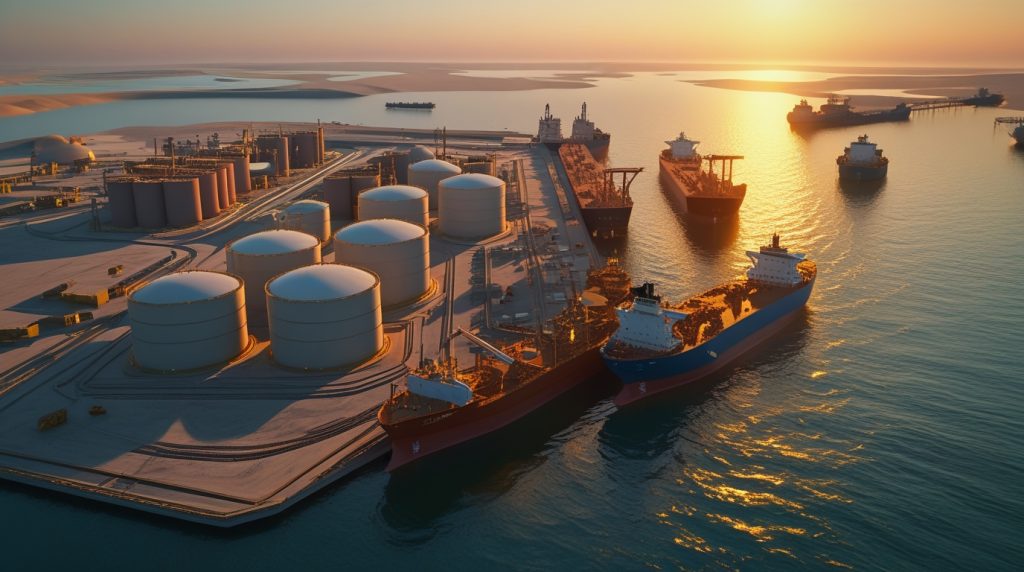
- Huge oil storage tanks
- Multiple loading terminals
- Pipeline networks
- Offshore mooring systems
One of the most important facilities on the island is the Kharg Oil Terminal.
This terminal is capable of loading some of the world’s largest oil tankers, including Very Large Crude Carriers (VLCCs).
At its peak capacity, Kharg Island has handled more than 90% of Iran’s oil exports.
Role in Global Energy Markets
Kharg Island plays a crucial role in global oil supply chains.
Iran is one of the world’s largest oil-producing countries, and much of its crude oil flows through Kharg Island before reaching international markets.
Why Kharg Island Matters Globally
- Major export hub – It handles the majority of Iran’s crude oil shipments.
- Strategic shipping route – Tankers leaving the island pass through critical maritime corridors.
- Energy security – Disruptions here can influence global oil prices.
- Geopolitical leverage – Control over exports affects regional power dynamics.
Because of this importance, international markets often closely monitor any developments related to Kharg Island.
Kharg Island During the Iran–Iraq War
Kharg Island became a major target during the Iran–Iraq War between Iran and Iraq.
During the war, Iraq launched numerous air strikes against the island’s oil terminals in an attempt to cripple Iran’s economy.
The Tanker War
The attacks on Kharg Island were part of what became known as the “Tanker War.”
Both countries targeted oil tankers and export facilities in the Persian Gulf.
Despite repeated bombings, Iran managed to repair facilities and continue exporting oil through the island.
This resilience demonstrated Kharg Island’s vital role in sustaining Iran’s wartime economy.
Infrastructure and Oil Facilities
Kharg Island contains one of the most advanced oil export infrastructures in the Middle East.
Key components include:
1. Oil Storage Tanks
The island has dozens of massive storage tanks capable of holding millions of barrels of crude oil.
These tanks serve as buffers between production and shipping schedules.
2. Offshore Loading Terminals
Several offshore terminals allow large tankers to dock safely and load crude oil directly from pipelines.
3. Pipeline Networks
Oil from mainland Iranian fields is transported via pipelines to Kharg Island for export.
4. Single Point Moorings (SPM)
These offshore systems allow supertankers to load oil without docking directly at the port.
This technology increases efficiency and safety.
Population and Life on Kharg Island
Despite its industrial character, Kharg Island is home to a small but stable population.
Most residents work in:
- Oil and energy industries
- Port operations
- Infrastructure maintenance
- Security services
The island has:
- Residential housing
- Hospitals
- Schools
- Recreational facilities
Because of its strategic importance, security on the island is tight.
Access is usually restricted to workers, officials, and authorized personnel.
Environmental Considerations
Large-scale oil operations inevitably raise environmental concerns.
The Persian Gulf ecosystem is particularly fragile due to its shallow waters and high salinity.
Environmental challenges include:
- Oil spills
- Marine pollution
- Industrial waste
- Coral reef damage
Iran has implemented environmental protection programs to minimize ecological damage around Kharg Island.
These include:
- Oil spill response systems
- Waste treatment facilities
- Marine monitoring programs
However, environmental groups argue that more transparency and international cooperation are needed.
Kharg Island and Geopolitics
Kharg Island is not just an industrial site—it is also a geopolitical asset.
The island sits in one of the world’s most strategically sensitive regions.
Tensions in the Persian Gulf often involve global powers, including the United States, regional rivals, and international shipping interests.
Because Iran’s oil exports depend heavily on Kharg Island, the island plays a key role in:
- Energy diplomacy
- Sanctions negotiations
- Regional security strategies
During periods of sanctions against Iran, the island remains a focal point for monitoring Iranian oil exports.
Economic Importance for Iran
For Iran, Kharg Island represents a cornerstone of the national economy.
Oil revenue has historically been a major contributor to government income.
Kharg Island facilitates this revenue by serving as the primary gateway through which Iranian crude reaches global markets.
Economic Contributions
The island supports:
- Oil export revenues
- Employment for thousands of workers
- Maritime trade operations
- Energy infrastructure development
Without Kharg Island, Iran’s ability to export oil efficiently would be significantly reduced.
Future Prospects of Kharg Island
Looking ahead, Kharg Island will likely remain a central hub for Iranian oil exports.
However, several factors could influence its future.
Emerging Trends
- Energy transition – Global shift toward renewable energy may reduce oil demand.
- Technological modernization – Infrastructure upgrades could improve efficiency.
- Regional tensions – Security concerns may shape operational strategies.
- Sanctions and diplomacy – International policies may affect export volumes.
Iran has already begun modernizing facilities on Kharg Island to maintain its role in global energy markets.
Tourism and Cultural Heritage
Although primarily industrial, Kharg Island also has cultural and historical attractions.
Archaeologists have discovered:
- Ancient tombs
- Historical churches
- Persian-era structures
Some historians believe the island once hosted early Christian communities.
However, tourism remains limited due to the island’s strategic and industrial importance.
Conclusion
Kharg Island stands as one of the most strategically significant islands in the global energy landscape.
From ancient maritime trade routes to its modern role as Iran’s primary oil export terminal, the island has shaped regional economics and geopolitics for decades.
Its deep-water ports, vast oil infrastructure, and strategic location in the Persian Gulf make it indispensable for Iran’s energy sector.
At the same time, Kharg Island remains a symbol of resilience—having survived wars, geopolitical tensions, and economic sanctions while continuing to function as a critical hub of global oil trade.
As the world transitions toward new energy systems, the role of Kharg Island may evolve. Yet its importance in the history and geopolitics of the Persian Gulf will remain undeniable.
FAQs About Kharg Island
1. Where is Kharg Island located?
Kharg Island is located in the Persian Gulf about 25 kilometers off the southern coast of Iran.
2. Why is Kharg Island important?
The island serves as Iran’s main oil export terminal and handles the majority of the country’s crude oil shipments.
3. Who operates the oil facilities on Kharg Island?
The facilities are operated by the National Iranian Oil Company.
4. Was Kharg Island attacked during the Iran–Iraq War?
Yes, the island was heavily targeted during the Iran–Iraq War because of its strategic oil export facilities.
5. Can tourists visit Kharg Island?
Tourism is limited because the island is primarily an industrial and strategic oil facility with restricted access.