Xiaomi vs Samsung: Which Phone Brand Is Better in 2026?
Choosing a new smartphone in 2026 can be surprisingly difficult. Xiaomi and Samsung remain two of the biggest names in the Android smartphone market, but they approach the market very differently.
Samsung generally focuses on polished software, premium design, long-term support, camera consistency, ecosystem integration and flagship features. Xiaomi, meanwhile, is known for aggressive hardware, fast charging, large batteries, high-resolution cameras and strong specifications for the money.
So, which brand is better in 2026: Xiaomi or Samsung?
The short answer is: Samsung is the better all-round choice for many users, while Xiaomi can offer better hardware value in several price segments. The right choice depends heavily on your budget and priorities.
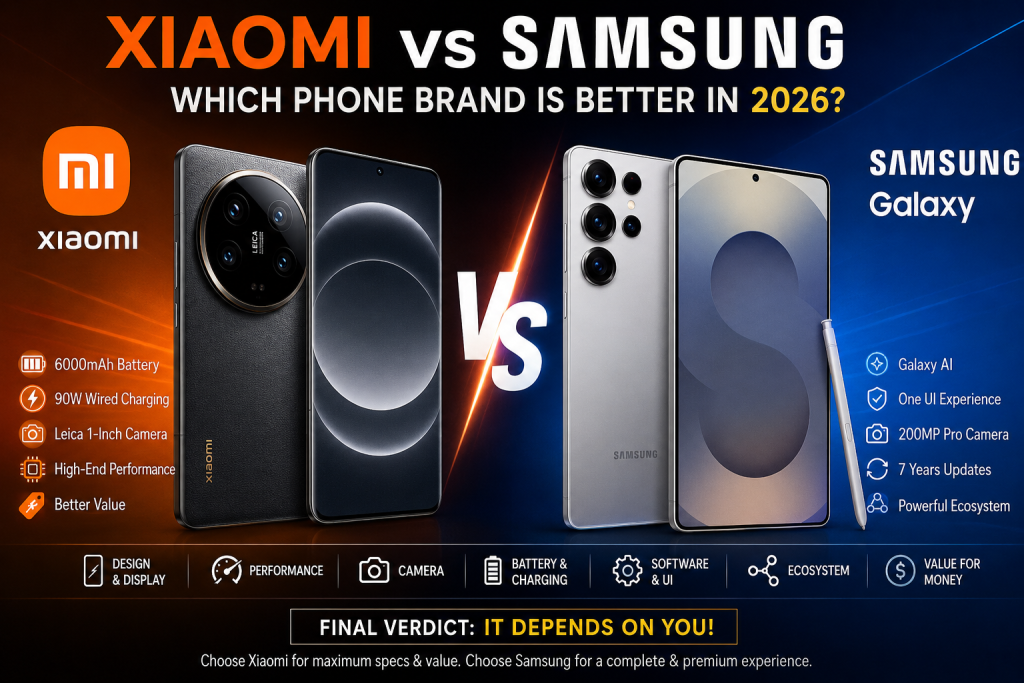
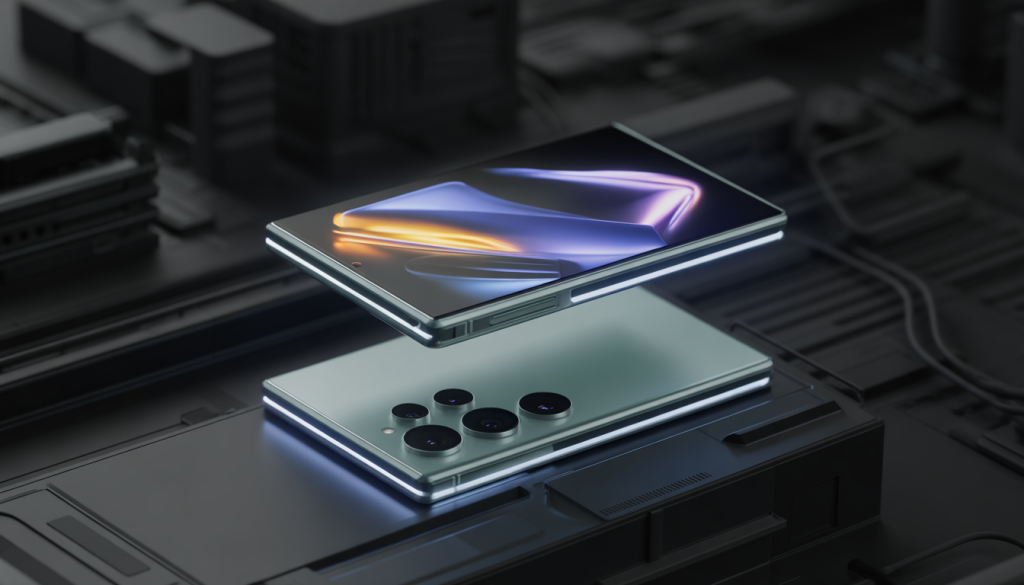
For example, Xiaomi’s current flagship approach is extremely hardware-focused. The Xiaomi 17 Ultra features a 6.9-inch 1–120Hz OLED display, a 6,000mAh battery, 90W wired charging, 50W wireless charging and a Leica-branded camera system with a 1-inch main sensor and 200MP telephoto camera.
Samsung’s Galaxy S26 Ultra takes a different approach, combining a 6.9-inch display, Snapdragon 8 Elite Gen 5 for Galaxy, a 200MP main camera, S Pen support, Galaxy AI features and Samsung’s broader ecosystem.
Let’s compare them in detail.
Xiaomi vs Samsung at a Glance
| Category | Xiaomi | Samsung | Winner |
|---|---|---|---|
| Design | Excellent | Excellent | Samsung |
| Display | Excellent | Excellent | Tie |
| Performance | Excellent | Excellent | Tie |
| Camera hardware | Exceptional on Ultra models | Excellent | Xiaomi |
| Camera consistency | Very good | Excellent | Samsung |
| Battery capacity | Usually larger | Very good | Xiaomi |
| Charging speed | Usually much faster | More conservative | Xiaomi |
| Software experience | HyperOS | One UI | Samsung |
| Software updates | Improving | Excellent | Samsung |
| AI features | Growing rapidly | Very mature | Samsung |
| Gaming | Excellent | Excellent | Tie |
| Ecosystem | Good | Excellent | Samsung |
| Value for money | Excellent | Good–Excellent | Xiaomi |
| Premium experience | Excellent | Excellent | Samsung |
| Overall | Hardware-focused | Balanced | Samsung |
Overall winner: Samsung for most users.
Best hardware value: Xiaomi.
1. Xiaomi vs Samsung: Design and Build Quality
Both companies produce attractive smartphones, but their design philosophies are different.
Samsung’s premium Galaxy phones typically emphasize a clean, refined appearance with premium materials, slim bodies and strong durability. The Galaxy S26 Ultra, for example, measures 7.9mm thick and weighs 214g.
Xiaomi’s premium models have also become considerably more sophisticated. The Xiaomi 17 Ultra is 8.29mm thick and weighs about 218g, while offering IP68 protection.
Samsung’s advantages
- Premium and minimalist design
- Excellent build quality
- Strong durability
- Refined ergonomics
- Excellent flagship finish
- Strong water and dust resistance on premium models
Xiaomi’s advantages
- Premium materials on flagship models
- Attractive camera designs
- Excellent displays
- IP-rated protection on many premium devices
- More experimentation with hardware design
Winner: Samsung
Samsung gets a small advantage because its design language is exceptionally consistent across the Galaxy range.
However, Xiaomi is no longer the brand you choose simply because you want inexpensive hardware.
2. Display: Xiaomi vs Samsung
Samsung has historically been one of the strongest names in smartphone displays, and that reputation continues in 2026.
The Galaxy S26 Ultra features a 6.9-inch QHD+ Dynamic AMOLED 2X display with a 1–120Hz adaptive refresh rate.
Xiaomi is also pushing display technology aggressively. The Xiaomi 17 Ultra features a 6.9-inch HyperRGB OLED display with a 1–120Hz refresh rate and a claimed peak brightness of up to 3,500 nits.
For everyday use, both brands provide excellent:
- AMOLED/OLED panels
- High refresh rates
- HDR support
- Strong outdoor visibility
- Deep blacks
- Excellent contrast
- Smooth scrolling
Samsung generally has the edge in display calibration and overall consistency, while Xiaomi often competes aggressively on brightness and specifications.
Winner: Samsung, narrowly
For most users, you won’t be disappointed with either.
3. Performance: Xiaomi vs Samsung
Performance is another category where the competition is extremely close.
The Galaxy S26 Ultra uses the Snapdragon 8 Elite Gen 5 for Galaxy, with Samsung highlighting improved CPU, GPU and NPU performance. Its redesigned vapor chamber is also claimed to provide a 21% improvement in thermal performance.
The Xiaomi 17 Ultra uses the Snapdragon 8 Elite Gen 5 Mobile Platform, paired with LPDDR5X RAM and UFS 4.1 storage. Xiaomi also uses a large cooling system designed for sustained performance.
For:
- Gaming
- Video editing
- Multitasking
- AI applications
- 4K/8K video
- High-end apps
both brands are excellent.
Gaming
Xiaomi can be particularly attractive to gamers because some models combine powerful chipsets with large batteries and aggressive cooling.
Samsung, however, provides a more mature overall software ecosystem and excellent optimization.
Winner: Tie
At the flagship level, performance differences are unlikely to be the deciding factor for most people.
4. Camera: Xiaomi vs Samsung
This is one of the most interesting comparisons.
Xiaomi has become increasingly ambitious in smartphone photography. The Xiaomi 17 Ultra features:
- 50MP 1-inch main camera
- 200MP telephoto camera
- 50MP ultrawide camera
- Leica optics
- Optical stabilization
- Mechanical 75–100mm telephoto zoom
- 8K video recording
- 4K 120fps video capability
Samsung’s Galaxy S26 Ultra features:
- 200MP main camera
- 50MP ultrawide
- 50MP 5x telephoto
- 10MP 3x telephoto
- 12MP selfie camera
- 8K video
- Samsung’s ProVisual Engine and Nightography features
Xiaomi camera strengths
Xiaomi is particularly attractive if you enjoy:
- Photography
- Portraits
- Telephoto photography
- Manual controls
- Large camera sensors
- Leica color profiles
- Experimental photography
Samsung camera strengths
Samsung is excellent for:
- Point-and-shoot photography
- Social media
- Video
- Night photography
- Moving subjects
- Consistent results
- Zoom versatility
Winner: Xiaomi for photography hardware; Samsung for consistency
If your priority is maximum camera hardware, Xiaomi is extremely compelling.
If you simply want to take a picture and expect predictable results, Samsung remains one of the safest choices.
5. Battery Life: Xiaomi vs Samsung
Battery technology is another area where Xiaomi frequently has an advantage.
The Xiaomi 17 Ultra has a 6,000mAh battery, while the Galaxy S26 Ultra has a 5,000mAh battery.
That doesn’t automatically mean Xiaomi will last exactly 20% longer because battery life depends on:
- Processor efficiency
- Display brightness
- Software
- Network conditions
- App usage
- Camera usage
- Gaming
Still, Xiaomi’s larger battery provides an important advantage for heavy users.
Winner: Xiaomi
6. Charging Speed: Xiaomi vs Samsung
This is probably one of the clearest Xiaomi victories.
The Xiaomi 17 Ultra supports:
- 90W wired charging
- 50W wireless charging
The Galaxy S26 Ultra supports up to 60W wired charging, with Samsung stating that it can reach approximately 75% in around 30 minutes with the appropriate adapter.
For someone who frequently forgets to charge their phone, Xiaomi’s faster charging can be extremely useful.
Winner: Xiaomi
7. Software: HyperOS vs One UI
This is where Samsung pulls ahead.
Xiaomi’s current smartphones use HyperOS, while Samsung uses One UI.
Xiaomi HyperOS offers:
- Modern interface
- Extensive customization
- AI features
- Strong Xiaomi-device integration
- Google services
- Smooth animations on newer flagship hardware
The Xiaomi 17 Ultra, for example, runs HyperOS 3 and includes Xiaomi HyperAI features such as AI writing, AI speech recognition, AI interpreter and AI search, alongside Google Gemini and Circle to Search support in supported regions.
Samsung’s One UI is generally more mature and offers a particularly strong combination of customization, productivity and ecosystem integration.
Samsung’s Galaxy AI strategy is also deeply integrated into the Galaxy experience.
Winner: Samsung
One UI is one of the strongest reasons to buy a Galaxy smartphone.
8. Software Updates and Long-Term Use
If you plan to keep your smartphone for several years, software support should be a major consideration.
Samsung has invested heavily in long-term software and security support, making newer Galaxy devices particularly attractive for people who don’t upgrade every year.
Xiaomi has also improved its update strategy significantly, but Samsung remains the safer choice if long-term software support is one of your highest priorities.
Winner: Samsung
9. AI Features: Samsung vs Xiaomi
AI is becoming a standard smartphone feature rather than an optional extra in 2026.
Samsung has made Galaxy AI one of the major pillars of its Galaxy ecosystem. The S26 Ultra combines AI functions with photography, productivity and other everyday smartphone tasks.
Xiaomi is also rapidly expanding AI through HyperAI. Its flagship devices now offer AI writing, speech recognition, interpretation, search and other AI tools.
However, availability can vary depending on:
- Country
- Language
- Phone model
- Software version
- Google services
- Account configuration
Winner: Samsung
Samsung currently has the more mature and integrated AI experience.
10. Ecosystem: Samsung vs Xiaomi
A smartphone is no longer an isolated product.
Samsung offers a broad ecosystem involving:
- Galaxy phones
- Galaxy tablets
- Galaxy Watch
- Galaxy Buds
- Smart TVs
- SmartThings
- Windows integration
Xiaomi also has a huge ecosystem, including:
- Xiaomi phones
- Tablets
- Smartwatches
- Earbuds
- TVs
- Smart-home products
- Routers
- IoT devices
Xiaomi can be particularly attractive if you already own several Xiaomi smart devices.
Samsung, however, generally offers the more mature premium ecosystem.
Winner: Samsung
11. Xiaomi vs Samsung for Gaming
Both brands can be excellent gaming phones.
Xiaomi’s advantages include:
- Large batteries
- Fast charging
- Powerful processors
- Strong cooling
- High-refresh-rate displays
- Competitive pricing
Samsung’s advantages include:
- Excellent flagship processors
- Mature software optimization
- Strong displays
- Good thermal management
- Reliable gaming performance
- Long-term software support
The Galaxy S26 Ultra’s redesigned cooling system is specifically designed to improve sustained performance during demanding workloads.
Winner: Tie
For hardcore gamers, Xiaomi may provide better hardware value. For someone who wants a gaming-capable phone that is also an excellent all-round device, Samsung is hard to beat.
12. Xiaomi vs Samsung in the Mid-Range Market
The flagship battle gets most of the attention, but the mid-range segment may be more important for ordinary consumers.
Samsung’s Galaxy A series remains one of its most important smartphone families. In 2026, Samsung introduced the Galaxy A57 5G and Galaxy A37 5G, adding upgraded performance, cameras, durability, security and AI features to its A-series lineup.
Xiaomi competes aggressively through its Xiaomi and Redmi families.
For example, the Redmi Note 15 Pro 5G launched in January 2026 with a 6,580mAh battery, 200MP camera, 6.83-inch 1.5K AMOLED display and Dimensity 7400-Ultra chipset.
This illustrates the difference between the two brands:
Samsung: balanced experience and software ecosystem.
Xiaomi/Redmi: maximum specifications and hardware value.
Winner: Xiaomi for specifications; Samsung for overall experience
13. Xiaomi vs Samsung: Which Brand Has Better Value?
If your main goal is to get the maximum hardware for your money, Xiaomi is usually the more aggressive competitor.
You may find Xiaomi phones offering:
- Higher charging speeds
- Larger batteries
- Higher megapixel counts
- More RAM/storage
- Powerful processors
- High-refresh-rate displays
Samsung often asks you to pay more for:
- Software refinement
- Brand ecosystem
- Long-term support
- Camera consistency
- Premium design
- AI features
- Productivity tools
Therefore, “better value” depends on what you consider valuable.
Best for hardware value: Xiaomi
Best for overall value: Samsung
14. Xiaomi vs Samsung for Students
For students, the answer depends on budget.
If you’re looking for:
- Long battery life
- Fast charging
- Good performance
- A strong display
- Affordable pricing
Xiaomi is an excellent choice.
If you’re more interested in:
- Long-term software support
- Productivity
- Samsung ecosystem
- Reliable cameras
- Premium software
Samsung may be worth the extra investment.
Winner: Xiaomi for budget-conscious students
15. Xiaomi vs Samsung for Photography
Photography is more complicated.
Xiaomi’s Leica partnership and large camera sensors give its premium phones impressive photographic hardware. The Xiaomi 17 Ultra’s 1-inch main sensor and 200MP telephoto system demonstrate how aggressively Xiaomi is approaching mobile photography.
Samsung takes a more computational approach, combining high-resolution sensors with image processing, Nightography and its ProVisual Engine.
Choose Xiaomi if:
- You enjoy photography
- You want powerful zoom
- You like Leica photography styles
- You want large camera sensors
- You enjoy manual controls
Choose Samsung if:
- You shoot children or moving subjects
- You want consistent results
- You record lots of video
- You want simple point-and-shoot photography
16. Xiaomi vs Samsung for Battery and Charging
This category is easier.
Xiaomi generally prioritizes battery capacity and charging speed.
Samsung generally prioritizes balanced battery efficiency and charging convenience.
The Xiaomi 17 Ultra’s 6,000mAh battery and 90W wired charging give it a clear specification advantage over the Galaxy S26 Ultra’s 5,000mAh battery and up-to-60W wired charging.
Winner: Xiaomi
17. Which Brand Is More Reliable?
Reliability isn’t determined solely by the brand.
A phone’s reliability depends on:
- Build quality
- Battery health
- Software updates
- Heat management
- User behavior
- Repair availability
- Parts availability
- Water exposure
- Charging habits
Samsung has a long-established service network in many markets, which can be a significant advantage.
Xiaomi’s reliability has improved considerably, especially in its premium devices.
Winner: Samsung
18. Xiaomi vs Samsung in Bangladesh
For Bangladeshi consumers, the decision can be slightly different from the global market.
Important considerations include:
- Official warranty
- Local service centers
- Official pricing
- Availability of replacement parts
- 4G/5G band compatibility
- Charger availability
- Local software support
- Resale value
Samsung has a particularly strong brand presence in Bangladesh, while Xiaomi and Redmi are also popular because of their competitive specifications and pricing.
If you are buying a phone in Bangladesh, don’t choose purely based on the lowest price. Check whether the model is officially sold in Bangladesh and whether the warranty applies locally.
Xiaomi vs Samsung: Pros and Cons
Xiaomi Pros
- Excellent hardware value
- Fast charging
- Large batteries
- Impressive displays
- Powerful processors
- Strong camera hardware
- Competitive mid-range phones
- Excellent flagship specifications
Xiaomi Cons
- Software can feel more complicated
- Update experience varies by model and region
- Some models include unnecessary pre-installed apps
- Camera processing can be inconsistent depending on the model
- Ecosystem integration isn’t as mature as Samsung’s
Samsung Pros
- Excellent One UI software
- Strong long-term support
- Excellent displays
- Consistent camera performance
- Strong AI features
- Excellent ecosystem
- Good resale value
- Wide product range
- Strong premium flagship experience
Samsung Cons
- Flagship phones can be expensive
- Charging is generally slower than Xiaomi
- Some mid-range models offer less hardware for the money
- Battery capacities aren’t always class-leading
Xiaomi vs Samsung: Which Should You Buy?
Here’s a simple recommendation.
Buy Xiaomi if you want:
Maximum specifications for your money.
Choose Xiaomi if your priorities are:
- Fast charging
- Big battery
- Gaming
- Camera hardware
- High specifications
- Display technology
- Hardware value
Buy Samsung if you want:
A polished, dependable all-round smartphone experience.
Choose Samsung if your priorities are:
- One UI
- Long-term software support
- Camera consistency
- AI features
- Premium design
- Ecosystem integration
- Resale value
- Productivity
Best Xiaomi vs Samsung Choice by User Type
| User Type | Recommended Brand |
|---|---|
| Budget buyer | Xiaomi |
| Student | Xiaomi |
| Gamer | Xiaomi/Samsung |
| Photographer | Xiaomi |
| Video creator | Samsung/Xiaomi |
| Business user | Samsung |
| Long-term user | Samsung |
| Heavy user | Xiaomi |
| Fast charging fan | Xiaomi |
| AI enthusiast | Samsung |
| Ecosystem user | Samsung |
| Premium flagship buyer | Samsung/Xiaomi |
| Best hardware value | Xiaomi |
| Best overall experience | Samsung |
Frequently Asked Questions
1. Is Xiaomi better than Samsung in 2026?
Not universally. Xiaomi generally offers stronger hardware value and faster charging, while Samsung offers better software refinement, ecosystem integration and long-term support.
2. Which is better, Xiaomi or Samsung?
For most users, Samsung is the better all-round choice. Xiaomi can be the better choice if specifications, battery and charging speed are your priorities.
3. Is Xiaomi camera better than Samsung?
At the flagship level, Xiaomi can offer exceptional camera hardware, especially for photography and telephoto shooting. Samsung tends to provide more consistent point-and-shoot and video results.
4. Which has better battery life, Xiaomi or Samsung?
Xiaomi often has the advantage because many Xiaomi models use larger batteries. The Xiaomi 17 Ultra, for example, has a 6,000mAh battery.
5. Which charges faster, Xiaomi or Samsung?
Xiaomi generally charges faster. The Xiaomi 17 Ultra supports 90W wired charging, while the Galaxy S26 Ultra supports up to 60W wired charging.
6. Which has better software, Xiaomi or Samsung?
Samsung’s One UI generally provides the more polished and mature software experience.
7. Is Samsung better for long-term use?
Yes. Samsung is generally the safer choice if long-term software support and security updates are important.
8. Is Xiaomi good for gaming?
Yes. Xiaomi’s combination of powerful processors, large batteries, fast charging and cooling systems makes many of its phones excellent gaming devices.
9. Which brand has better displays?
Both are excellent. Samsung has a particularly strong reputation for display quality, while Xiaomi increasingly competes at the highest level.
10. Which is better for students?
Xiaomi is often the better choice for students with a limited budget because of its strong hardware-to-price ratio.
11. Which phone brand has better AI features?
Samsung currently has the advantage in terms of AI integration and ecosystem maturity, although Xiaomi’s HyperAI platform is developing rapidly.
12. Which brand is better for photography?
For serious photography hardware, Xiaomi’s flagship models are extremely competitive. Samsung remains excellent for consistent everyday photography and video.
13. Which brand has better resale value?
Samsung generally has an advantage in resale value, although this can vary significantly by country, model and condition.
14. Should I buy a Xiaomi flagship or Samsung flagship?
Choose Xiaomi for camera hardware, battery and charging. Choose Samsung for software, ecosystem, AI and long-term ownership.
15. Is Xiaomi cheaper than Samsung?
In many comparable segments, Xiaomi tends to offer more hardware for the price. Actual prices vary by model and market.
Final Verdict: Xiaomi vs Samsung in 2026
So, which phone brand is better in 2026—Xiaomi or Samsung?
There isn’t a single answer for everyone.
Samsung wins the overall battle because it offers the more complete smartphone experience. One UI is polished, Galaxy AI is deeply integrated, the ecosystem is excellent, flagship cameras are consistent, and long-term ownership is a major strength.
But Xiaomi wins the hardware-value battle.
If you want a smartphone with an enormous battery, extremely fast charging, impressive display technology and aggressive camera hardware, Xiaomi deserves serious consideration. The Xiaomi 17 Ultra demonstrates just how far Xiaomi has pushed flagship smartphone hardware in 2026.
Samsung’s Galaxy S26 Ultra, meanwhile, demonstrates the strength of a more holistic approach, combining premium hardware with Galaxy AI, S Pen functionality, a mature software experience and a broad ecosystem.
Our final score
| Category | Xiaomi | Samsung |
|---|---|---|
| Design | 9/10 | 9.5/10 |
| Display | 9.5/10 | 9.5/10 |
| Performance | 9.5/10 | 9.5/10 |
| Camera | 9.7/10 | 9.5/10 |
| Battery | 9.7/10 | 9/10 |
| Charging | 10/10 | 8.5/10 |
| Software | 8.5/10 | 9.5/10 |
| AI | 8.8/10 | 9.5/10 |
| Ecosystem | 8.5/10 | 9.7/10 |
| Value | 9.7/10 | 8.8/10 |
| Overall | 9.2/10 | 9.3/10 |
🏆 Overall Winner: Samsung
🥇 Best for overall experience: Samsung
🥇 Best for hardware value: Xiaomi
🥇 Best for charging: Xiaomi
🥇 Best for software: Samsung
🥇 Best for ecosystem: Samsung
🥇 Best for camera hardware: Xiaomi
🥇 Best for long-term ownership: Samsung
🥇 Best for budget-conscious buyers: Xiaomi
Bottom line: If you want a phone that simply does almost everything exceptionally well, choose Samsung. If you want to maximize hardware and performance for your money, Xiaomi may be the smarter purchase.
Note: Specifications and AI/software availability can vary by model, country and carrier. Always check the official local specifications and warranty before purchasing.