Time, You Old Gypsy Man
Ralph Hodgson
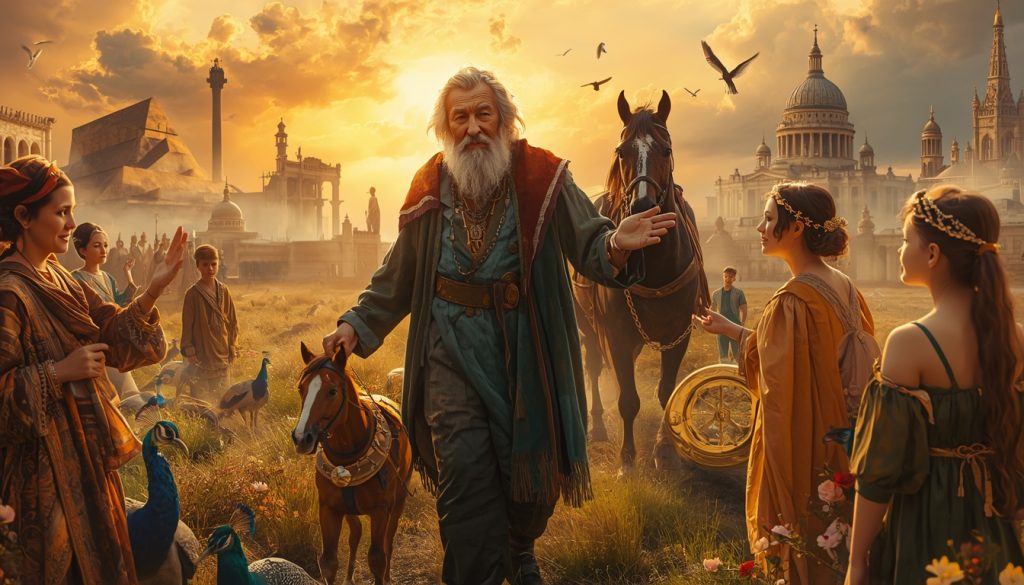
Time, you old gipsy man,
Will you not stay,
Put up your caravan
Just for one day?
All things I’ll give you
Will you be my guest,
Bells for your jennet
Of silver the best,
Goldsmiths shall beat you
A great golden ring,
Peacocks shall bow to you,
Little boys sing.
Oh, and sweet girls will
Festoon you with may.
Time, you old gipsy,
Why hasten away?
Last week in Babylon,
Last night in Rome,
Morning, and in the crush
Under Paul’s dome;
Under Paul’s dial
You tighten your rein—
Only a moment,
And off once again;
Off to some city
Now blind in the womb,
Off to another
Ere that’s in the tomb.
Time, you old gipsy man,
Will you not stay,
Put up your caravan
Just for one day?
Line by line translation
Time, you old gipsy man,
হে সময়, তুমি বুড়ো যাযাবর মানুষ,
Will you not stay,
তুমি কি থাকবে না,
Put up your caravan
তোমার কাফেলাটি থামিয়ে
Just for one day?
শুধু এক দিনের জন্য?
All things I’ll give you
আমি তোমাকে সবকিছু দেব,
Will you be my guest,
তুমি কি হবে আমার অতিথি,
Bells for your jennet
তোমার ছোট্ট ঘোড়ার জন্য ঘণ্টা,
Of silver the best,
সেরা রুপার তৈরি।
Goldsmiths shall beat you
স্বর্ণকারেরা তোমার জন্য গড়বে
A great golden ring,
এক বিশাল সোনার আংটি,
Peacocks shall bow to you,
ময়ূররা তোমাকে নমস্কার করবে,
Little boys sing.
ছোট ছেলেরা গান গাইবে।
Oh, and sweet girls will
আর মিষ্টি মেয়েরা
Festoon you with may.
মে মাসের ফুল দিয়ে তোমাকে সাজাবে।
Time, you old gipsy,
হে সময়, বুড়ো যাযাবর,
Why hasten away?
এত তাড়াহুড়ো করে চলে যাচ্ছ কেন?
Last week in Babylon,
গত সপ্তাহে ছিলে ব্যাবিলনে,
Last night in Rome,
গত রাতে রোমে,
Morning, and in the crush
আর সকালে মানুষের ভিড়ের মাঝে
Under Paul’s dome;
সেন্ট পলের গম্বুজের নিচে;
Under Paul’s dial
সেন্ট পলের ঘড়ির নিচে
You tighten your rein—
তুমি লাগাম টেনে ধরো,
Only a moment,
মাত্র এক মুহূর্ত,
And off once again;
তারপর আবার রওনা হও;
Off to some city
চলে যাও এমন কোনো শহরে
Now blind in the womb,
যা এখনো জন্মই নেয়নি,
Off to another
আবার চলে যাও অন্য এক শহরে
Ere that’s in the tomb.
তার কবরেও যাওয়ার আগেই।
Time, you old gipsy man,
হে সময়, তুমি বুড়ো যাযাবর,
Will you not stay,
তুমি কি থাকবে না,
Put up your caravan
তোমার কাফেলাটি থামিয়ে
Just for one day?
শুধু এক দিনের জন্য?
Explain each stanza briefly
Stanza 1
Time, you old gipsy man… Just for one day?
The poet addresses Time as an old gypsy (traveler) and requests it to stop its journey for just one day. He wishes time would pause so that people could enjoy life a little longer.
কবি সময়কে একজন বৃদ্ধ যাযাবর ভ্রমণকারীরূপে সম্বোধন করেছেন এবং তাকে অন্তত একদিনের জন্য থেমে থাকার অনুরোধ করেছেন। তিনি চান সময় যেন কিছুক্ষণ থেমে থাকে, যাতে মানুষ জীবনকে আরও কিছুটা উপভোগ করতে পারে।
Stanza 2
All things I’ll give you… Of silver the best,
The poet promises to give Time valuable gifts and hospitality. He offers the best silver bells for Time’s horse if Time agrees to stay.
কবি সময়কে তার প্রয়োজনীয় সবকিছু দেওয়ার প্রতিশ্রুতি দেন। এমনকি সময় যদি থেকে যায়, তবে তার ঘোড়ার জন্য সেরা রুপার ঘণ্টাও উপহার দেওয়ার কথা বলেন।
Stanza 3
Goldsmiths shall beat you… Little boys sing.
The poet continues tempting Time with more honors and rewards. Goldsmiths will make a golden ring for him, peacocks will bow, and children will sing in his honor.
কবি সময়কে আরও সম্মান ও পুরস্কার দেওয়ার প্রস্তাব করেন। স্বর্ণকারেরা তার জন্য সোনার আংটি তৈরি করবে, ময়ূররা তাকে সম্মান জানাবে এবং ছোট ছেলেরা তার প্রশংসায় গান গাইবে।
Stanza 4
Oh, and sweet girls will… Why hasten away?
Beautiful girls will decorate Time with fresh flowers. Despite all these attractive offers, Time keeps moving, and the poet sadly asks why it is always in such a hurry.
সুন্দর মেয়েরা ফুল দিয়ে সময়কে সাজাবে। তবুও সময় থামে না। তাই কবি দুঃখের সঙ্গে জিজ্ঞেস করেন, সময় সবসময় এত তাড়াহুড়ো করে কেন চলে যায়।
Stanza 5
Last week in Babylon… Under Paul’s dome;
The poet shows how Time travels endlessly from place to place and age to age. It was in ancient Babylon, then Rome, and now in London (under St. Paul’s Cathedral), showing that Time never stays anywhere.
কবি দেখিয়েছেন যে সময় সর্বদা ভ্রমণ করে বেড়ায়। গত সপ্তাহে তা ব্যাবিলনে ছিল, গত রাতে রোমে ছিল এবং এখন সেন্ট পলস ক্যাথেড্রালের নিচে আছে। সময় কখনো এক জায়গায় স্থির থাকে না।
Stanza 6
Under Paul’s dial… And off once again;
Time pauses only for a brief moment before continuing its journey. It is constantly moving and cannot be stopped.
সময় মাত্র এক মুহূর্তের জন্য থামে, তারপর আবার তার যাত্রা শুরু করে। সময়কে ধরে রাখা বা নিয়ন্ত্রণ করা অসম্ভব।
Stanza 7
Off to some city… Ere that’s in the tomb.
Time moves forward to places and generations that do not yet exist and leaves them before they die out. This suggests the endless flow of time from birth to death and beyond.
সময় এমন সব শহর ও প্রজন্মের দিকে এগিয়ে যায়, যেগুলো এখনো জন্মই নেয়নি। একটি স্থান ধ্বংস হওয়ার আগেই সময় অন্য স্থানে চলে যায়।
Stanza 8
Time, you old gipsy man… Just for one day?
The poem ends with the same plea as the beginning. The poet once again asks Time to stay for a day, emphasizing his wish to stop the rapid passage of time, even though he knows it is impossible.
কবি আবারও সময়কে একদিনের জন্য থেমে থাকার অনুরোধ করেন। এই পুনরাবৃত্তি সময়ের দ্রুত গতিকে থামানোর তার গভীর আকাঙ্ক্ষাকে প্রকাশ করে।
Summary
English
The poem “Time, You Old Gypsy Man” is about the poet’s wish to stop time for a while. He asks Time, which he imagines as an old wandering gypsy, to stay for just one day. He offers gifts, honor, and beauty to persuade Time to remain. However, Time never stops and keeps moving from place to place and from age to age. Through this poem, the poet shows that time moves continuously and cannot be controlled by anyone.
বাংলা
“Time, You Old Gypsy Man” কবিতায় কবি কিছু সময়ের জন্য সময়কে থামিয়ে রাখতে চান। তিনি সময়কে এক বৃদ্ধ যাযাবরের মতো কল্পনা করে মাত্র একদিন থাকার অনুরোধ করেন। সময়কে থামানোর জন্য তিনি নানা উপহার, সম্মান ও সৌন্দর্যের প্রস্তাব দেন। কিন্তু সময় কখনো থামে না; এটি এক স্থান থেকে অন্য স্থানে এবং এক যুগ থেকে অন্য যুগে অবিরাম চলতে থাকে। এই কবিতার মাধ্যমে কবি দেখিয়েছেন যে সময়ের গতি কখনো থামে না এবং কেউই তাকে নিয়ন্ত্রণ করতে পারে না।
Theme of the Poem
English
The main theme of “Time, You Old Gypsy Man” is the unceasing flow of time and the human desire to stop it. The poet portrays Time as a restless gypsy who is always traveling from one place and age to another. Even though the poet offers gifts, honor, and hospitality, Time refuses to stay. Through this, the poem conveys that time never waits for anyone and keeps moving forward. It reminds us to value and make the best use of every moment of our lives.
বাংলা
“Time, You Old Gypsy Man” কবিতার মূল প্রতিপাদ্য হলো সময়ের নিরবচ্ছিন্ন গতি এবং মানুষে্র সময়কে থামিয়ে রাখার আকাঙ্ক্ষা। কবি সময়কে এক অস্থির যাযাবরের রূপে কল্পনা করেছেন, যে সবসময় এক স্থান ও যুগ থেকে অন্য স্থানে চলে যায়। কবি নানা উপহার, সম্মান ও আপ্যায়নের প্রস্তাব দিলেও সময় থেমে থাকে না। এর মাধ্যমে কবিতাটি বোঝায় যে সময় কারও জন্য অপেক্ষা করে না এবং অবিরাম এগিয়ে চলে। তাই আমাদের জীবনের প্রতিটি মুহূর্তকে মূল্য দিতে এবং সঠিকভাবে ব্যবহার করতে হবে।
Questions from English for Today
(1) Have you ever seen a gipsy? If yes, where?
Answer: Yes, I have seen a gipsy at a local fair.
(2) Do gipsies live in our country?
Answer: Yes, some gipsies live in our country.
(3) In what ways are they different from the general people?
Answer: They usually move from place to place and do not live permanently in one area.
(4) Why does the poet call Time an “Old Gipsy Man”?
Answer: The poet calls Time an “Old Gipsy Man” because Time is always moving and never stays in one place.
(5) Make a list of things the poet will offer Time if it stays just for a day.
Answer: The poet will offer silver bells, a golden ring, songs, respect, and flowers.
(6) What else can you offer Time if it stays for a day?
Answer: I can offer Time my respect and gratitude.
(7) What does the poem imply about the human struggle to control or delay Time?
Answer: The poem implies that people want to stop Time, but they cannot control it.
(8) Is the poem’s message about Time ultimately pessimistic or realistic? Discuss.
Answer: The poem’s message is realistic because it shows that Time always moves forward.
More Practice
(a) What is the significance of time being compared to a ‘Gipsy Man’ in the poem?
Answer: It shows that Time is always wandering and never stays in one place.
(b) “Time, you old gipsy, Why hasten away?” What does the expression mean?
Answer: The expression means that the poet wants to know why Time passes so quickly.
(c) What role does the metaphor of “tighten your rein” play in the poem?
Answer: It suggests that Time pauses briefly before continuing its journey.
(d) “All things I’ll give you, Will you be my guest?” What does it mean?
Answer: It means that the poet is offering everything to persuade Time to stay.
(e) What is the main idea of the poem “Time, You Old Gipsy Man”?
Answer: The main idea is that Time never stops moving.
(f) Why does the poet describe Time as ‘Old’ in the poem?
Answer: The poet describes Time as old because it has existed since ancient times.
(g) How does the poet plan to honor Time in the poem?
Answer: The poet plans to honor Time with gifts, songs, and flowers.
(h) What is the significance of “Last week in Babylon” in the poem?
Answer: It shows that Time travels through different places and ages.
(i) What places are mentioned in the journey of Time in the poem?
Answer: Babylon, Rome, and St. Paul’s are mentioned in the poem.
(j) What request does the speaker make to Time in the poem?
Answer: The speaker requests Time to stay for one day.
(k) What lesson does “Time, You Old Gipsy Man” teach about life?
Answer: The poem teaches us to value and use Time wisely.
(l) Why does the poet plead with Time to stay in the poem?
Answer: The poet pleads with Time because he wants to enjoy life longer.
(m) What does the poet suggest about human helplessness in the poem?
Answer: The poet suggests that humans cannot stop or control Time.
(n) What does the phrase “Put up your caravan” symbolize?
Answer: It symbolizes stopping the journey and staying for a while.
(o) What emotions does the phrase “festoon you with may” convey?
Answer: It conveys love, respect, and warm welcome.
(p) How will the poet welcome Time if it agrees to stay with the poet for a day?
Answer: The poet will welcome Time with gifts, songs, and flowers.
(q) Which two cities have been mentioned in the poem and why?
Answer: Babylon and Rome have been mentioned to show Time’s endless journey.
(r) How does the poet personify Time in “Time, You Old Gipsy Man”?
Answer: The poet personifies Time as an old gypsy traveler.
(s) What message does the poem convey about human life?
Answer: The poem conveys that life is short and Time never waits.
(t) How does “Time, You Old Gipsy Man” reflect the poet’s personal feelings?
Answer: It reflects the poet’s wish to stop Time and enjoy life more.
(u) What is the poet’s ultimate desire from Time?
Answer: The poet’s ultimate desire is that Time should stay for one day.
Short Questions with Answers
- Who is the poet of the poem “Time, You Old Gypsy Man”?
Answer: Ralph Hodgson is the poet of the poem. - Whom does the poet address in the poem?
Answer: The poet addresses Time in the poem. - How does the poet describe Time in the poem?
Answer: The poet describes Time as an old gypsy man. - What does the poet request Time to do?
Answer: The poet requests Time to stay for one day. - Why does the poet ask Time to stay?
Answer: The poet wants Time to stay so that people can enjoy life longer. - What does the word “caravan” mean in the poem?
Answer: The word “caravan” means a group of travelers moving together. - How long does the poet want Time to stay?
Answer: The poet wants Time to stay for just one day. - What does the poet offer to Time as a guest?
Answer: The poet offers everything he has to Time as a guest. - What does the poet promise for Time’s jennet?
Answer: The poet promises the best silver bells for Time’s jennet. - What is meant by a jennet in the poem?
Answer: A jennet means a small horse. - Who will make a golden ring for Time?
Answer: Goldsmiths will make a golden ring for Time. - What kind of ring will the goldsmiths make?
Answer: The goldsmiths will make a great golden ring. - Which birds will bow to Time according to the poet?
Answer: Peacocks will bow to Time. - Who will sing in honor of Time?
Answer: Little boys will sing in honor of Time. - Who will decorate Time with flowers?
Answer: Sweet girls will decorate Time with flowers. - Why does the poet ask Time why it hastens away?
Answer: The poet asks this because Time never stays in one place. - Where was Time last week according to the poem?
Answer: Time was in Babylon last week. - Where was Time last night according to the poet?
Answer: Time was in Rome last night. - Where is Time found in the morning?
Answer: Time is found under Paul’s dome in the morning. - What does Time do under Paul’s dial?
Answer: Time tightens its rein under Paul’s dial. - How long does Time stay under Paul’s dial?
Answer: Time stays there for only a moment. - What does Time do after a brief stop?
Answer: Time starts its journey again after a brief stop. - Where does Time go after leaving Paul’s dial?
Answer: Time goes to another city after leaving Paul’s dial. - What does the phrase “blind in the womb” suggest?
Answer: The phrase suggests a city or generation that has not yet been born. - What does the phrase “in the tomb” refer to?
Answer: The phrase refers to death or destruction. - Q: What is the theme of the poem?
A: The poem’s theme is the unstoppable flow of time and the human desire to stop it. - Q: What is the central message of the poem?
A: The poem teaches us that time never waits for anyone, so we should use it wisely. - Is Time shown as a static or a moving force in the poem?
Answer: Time is shown as a constantly moving force in the poem. - Why is Time compared to a gypsy man?
Answer: Time is compared to a gypsy man because it never stays in one place. - What does the poet want to do with Time?
Answer: The poet wants to stop Time for a short period. - What does Time symbolize in the poem?
Answer: Time symbolizes the continuous flow of life. - Can the poet stop Time with gifts and honors?
Answer: No, the poet cannot stop Time with gifts and honors. - What is the central idea of the poem?
Answer: The central idea of the poem is that Time never stops moving. - What kind of traveler is Time presented as?
Answer: Time is presented as a restless traveler. - How does the poet try to attract Time?
Answer: The poet tries to attract Time by offering gifts and respect. - What does the poet promise to Time besides silver bells?
Answer: The poet promises a golden ring to Time besides silver bells. - Why does the poet admire Time?
Answer: The poet admires Time because of its vast power and endless journey. - What does the movement of Time suggest?
Answer: The movement of Time suggests that life is always changing. - What does the poet learn from Time’s behavior?
Answer: The poet learns that Time cannot be controlled. - Why is Babylon mentioned in the poem?
Answer: Babylon is mentioned to show Time’s journey through history. - Why is Rome mentioned in the poem?
Answer: Rome is mentioned to emphasize Time’s continuous movement. - What does St. Paul’s Cathedral represent in the poem?
Answer: St. Paul’s Cathedral represents the present stage of Time’s journey. - What does the poet mean by “Only a moment”?
Answer: The poet means that Time pauses for a very short period. - How does Time behave after stopping briefly?
Answer: Time quickly resumes its journey after stopping briefly. - What is the poet’s attitude toward Time?
Answer: The poet’s attitude toward Time is respectful and admiring. - Why does the poet repeatedly request Time to stay?
Answer: The poet repeatedly requests Time to stay because he wishes to enjoy life longer. - What does the caravan symbolize in the poem?
Answer: The caravan symbolizes Time’s endless journey. - What is meant by the phrase “hasten away”?
Answer: The phrase “hasten away” means to move away quickly. - How does the poet personify Time?
Answer: The poet personifies Time as an old gypsy traveler. - What does the poet’s invitation reveal about his feelings?
Answer: The poet’s invitation reveals his desire to hold on to precious moments. - Why do peacocks bow to Time?
Answer: Peacocks bow to Time as a sign of respect. - Why do little boys sing for Time?
Answer: Little boys sing for Time to honor and welcome it. - What is the significance of the silver bells?
Answer: The silver bells symbolize the poet’s generosity toward Time. - What is the significance of the golden ring?
Answer: The golden ring symbolizes honor and admiration. - How does the poet describe the future?
Answer: The poet describes the future as a city still in the womb. - What does “blind in the womb” symbolize?
Answer: It symbolizes something that has not yet come into existence. - What does the tomb symbolize in the poem?
Answer: The tomb symbolizes death and the end of life. - How does Time connect the past, present, and future?
Answer: Time connects the past, present, and future through its continuous movement. - What human wish is expressed in the poem?
Answer: The poem expresses the human wish to stop Time. - Does Time pay attention to the poet’s requests?
Answer: No, Time does not pay attention to the poet’s requests. - Why is Time called old in the poem?
Answer: Time is called old because it has existed since ancient times. - What does Time’s journey from city to city suggest?
Answer: Time’s journey suggests that change is constant. - What does the poet offer to make Time comfortable?
Answer: The poet offers gifts, respect, and hospitality to make Time comfortable. - What is the poet unable to achieve?
Answer: The poet is unable to stop Time’s movement. - How is the idea of movement emphasized in the poem?
Answer: The idea of movement is emphasized by showing Time traveling from place to place. - Why is the poem considered philosophical?
Answer: The poem is considered philosophical because it reflects on the nature of Time. - What is the poet’s greatest desire?
Answer: The poet’s greatest desire is to make Time stay for a day. - What lesson does the poem teach about life?
Answer: The poem teaches that life is short and Time is precious. - How does the poet express his helplessness?
Answer: The poet expresses his helplessness by repeatedly asking Time to stay. - What does Time’s refusal to stay symbolize?
Answer: Time’s refusal to stay symbolizes its unstoppable nature. - Why is Time important in human life?
Answer: Time is important because it shapes every aspect of life. - What does the poet realize at the end of the poem?
Answer: The poet realizes that Time cannot be stopped. - How does the repetition of the first stanza affect the poem?
Answer: The repetition emphasizes the poet’s longing and desire. - What is the tone of the poem?
Answer: The tone of the poem is thoughtful and reflective. - What kind of imagery is used in the poem?
Answer: The poem uses vivid images of travel, gifts, and history. - How does the poem portray the passage of Time?
Answer: The poem portrays the passage of Time as swift and continuous. - Why does the poet treat Time as a guest?
Answer: The poet treats Time as a guest in order to persuade it to stay. - What are the poet’s offers unable to change?
Answer: The poet’s offers are unable to change Time’s nature. - What does the poem suggest about human power over Time?
Answer: The poem suggests that humans have no power over Time. - What feeling is created by Time’s constant movement?
Answer: Time’s constant movement creates a feeling of sadness and longing. - Why does the poet mention different places in the poem?
Answer: The poet mentions different places to show the universality of Time. - What is the poet’s view of Time?
Answer: The poet views Time as powerful and unstoppable. - How does the poem encourage us to value Time?
Answer: The poem encourages us to value Time because it never returns. - What does the poet’s appeal to Time reveal about human nature?
Answer: It reveals that humans wish to preserve happy moments. - What does Time represent beyond clocks and calendars?
Answer: Time represents the ongoing journey of life. - Why does the poet use historical cities in the poem?
Answer: The poet uses historical cities to demonstrate Time’s long journey through history. - What makes Time different from ordinary travelers?
Answer: Time is different because it never stops its journey. - What does the poet hope to gain by stopping Time?
Answer: The poet hopes to enjoy life and happiness for a longer period. - How is Time related to change in the poem?
Answer: Time brings change wherever it goes. - What does the poem suggest about the future?
Answer: The poem suggests that Time will continue into the future endlessly. - What does Time do before a city reaches the tomb?
Answer: Time moves on to another place before that city dies. - Why is the poem still relevant today?
Answer: The poem is still relevant because Time remains important in everyone’s life. - What message does the poet give through Time’s journey?
Answer: The poet gives the message that Time never stands still. - How is the poet emotionally connected to Time?
Answer: The poet is emotionally connected through admiration and longing. - Why is Time called a gypsy instead of a king?
Answer: Time is called a gypsy because it wanders endlessly from place to place. - What does the poem reveal about the nature of existence?
Answer: The poem reveals that everything changes with Time. - How does the poem present the relationship between humans and Time?
Answer: The poem presents humans as unable to control Time. - What advice can readers learn from the poem?
Answer: Readers can learn to use their time wisely. - Why is Time described as restless?
Answer: Time is described as restless because it never remains in one place. - What feeling does the ending of the poem create?
Answer: The ending creates a feeling of longing and acceptance. - What is the most important symbol in the poem?
Answer: The most important symbol in the poem is Time itself. - What is the overall message of “Time, You Old Gypsy Man”?
Answer: The overall message of the poem is that Time moves forward endlessly and waits for no one.