The Three Caskets
Bassanio went to Belmont to visit Portia grandly dressed, with many servants. Portia’s father had died lately. Before his death he had thought of an unusual plan to find a good husband for his daughter. He wanted a man to marry Portia for herself and not for her wealth. He had three caskets made, one of gold, one of silver and one of lead. One of the caskets had Portia’s portrait in it. The suitor who would first choose the casket with the portrait would marry her.
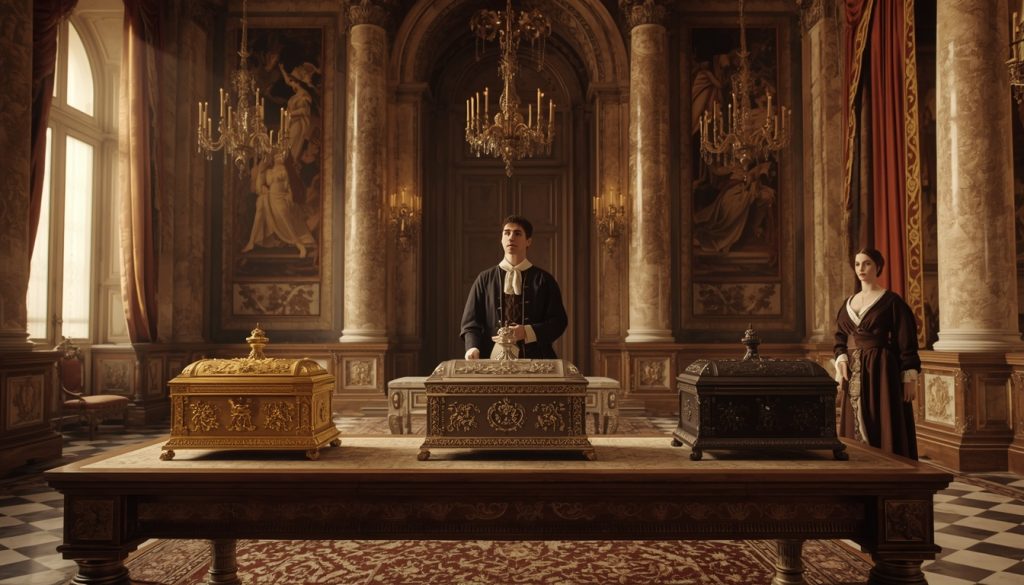
The first one to try was the prince of Morocco. He thought that silver and lead are poor metals. It is the casket made of precious metal that can hold the precious picture. So he chose the gold casket. But all he found was a picture of a skull with a message that said, “All that glitters is not gold.” The prince was very sad and went back home. Then came the prince of Spain. He looked at the silver casket for a long time. On it was written, “He who chooses me will get what he deserves.” The prince had a very high opinion about himself. He thought that he deserved the best. He therefore chose the silver casket and opened it. Inside the casket he found the picture of a blinking fool. He was very disappointed and offended. He immediately rode away.
Then it was Bassanio’s tum. He looked at the caskets for a long time. He thought, ” Appearances are often misleading. Bad men appear good and they hide their inner ugliness under fine clothes.” So he chose the plain looking lead casket. On opening the casket, he found the portrait of Portia inside.
Bassanio and Portia got married. There was great joy at Belmont and the newly married couple were spending their time happily.
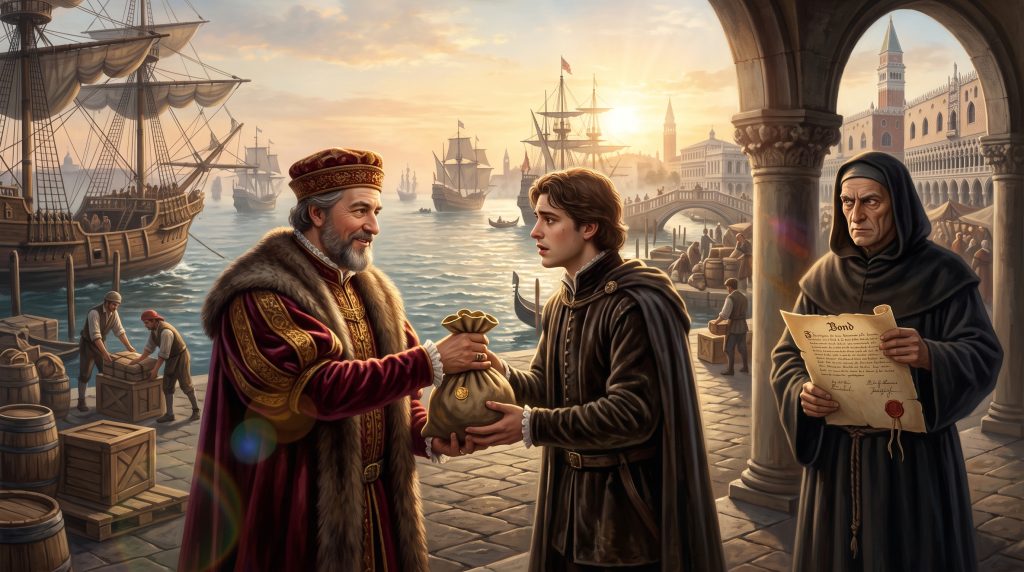
But soon their happiness turned into sorrow by a piece of news. A messenger came with a letter from Antonio. The letter said, “Dear friend Bassanio, all my ships have been lost at sea. I cannot pay the money I owe to Shylock. So I have to pay the penalty. Dear friend, come and see me if possible. I would like to see you once before I die.” Bassanio quickly left for Venice.
The Three Caskets (তিনটি সিন্দুক)
Bassanio went to Belmont to visit Portia grandly dressed, with many servants. ব্যাসানিও জাঁকজমকপূর্ণ পোশাক পরে এবং অনেক ভৃত্য সঙ্গে নিয়ে পরশিয়ার সঙ্গে দেখা করতে বেলমন্টে গেল। Portia’s father had died lately. সম্প্রতি পরশিয়ার বাবা মারা গিয়েছিলেন। Before his death he had thought of an unusual plan to find a good husband for his daughter. মৃত্যুর আগে তিনি তাঁর মেয়ের জন্য একজন উপযুক্ত স্বামী খুঁজে বের করার একটি অদ্ভুত পরিকল্পনা করেছিলেন। He wanted a man to marry Portia for herself and not for her wealth. তিনি চেয়েছিলেন, কোনো ব্যক্তি যেন পরশিয়াকে তার সম্পদের জন্য নয়, বরং তাকে ভালোবেসে বিয়ে করে। He had three caskets made, one of gold, one of silver and one of lead. তিনি তিনটি সিন্দুক তৈরি করিয়েছিলেন, একটি সোনার, একটি রূপার এবং একটি সিসার। One of the caskets had Portia’s portrait in it. সিন্দুকগুলোর একটিতে পরশিয়ার প্রতিকৃতি রাখা ছিল। The suitor who would first choose the casket with the portrait would marry her. যে পাত্র প্রথমে প্রতিকৃতিযুক্ত সিন্দুকটি নির্বাচন করতে পারবে, সেই পরশিয়াকে বিয়ে করবে।
The first one to try was the prince of Morocco. প্রথমে চেষ্টা করলেন মরক্কোর রাজপুত্র। He thought that silver and lead are poor metals. তিনি ভাবলেন যে রূপা ও সিসা সাধারণ ধাতু। It is the casket made of precious metal that can hold the precious picture. মূল্যবান ছবিটি নিশ্চয়ই মূল্যবান ধাতুর তৈরি সিন্দুকেই রাখা হয়েছে। So he chose the gold casket. তাই তিনি সোনার সিন্দুকটি বেছে নিলেন।
But all he found was a picture of a skull with a message that said, “All that glitters is not gold.” কিন্তু সেখানে তিনি একটি খুলি (মৃত মানুষের মাথার হাড়)-এর ছবি পেলেন, যার সঙ্গে লেখা ছিল, “যা চকচক করে, তা সবই সোনা নয়।” The prince was very sad and went back home. রাজপুত্র খুব দুঃখ পেলেন এবং নিজের দেশে ফিরে গেলেন।
Then came the prince of Spain. এরপর এলেন স্পেনের রাজপুত্র। He looked at the silver casket for a long time. তিনি অনেকক্ষণ ধরে রূপার সিন্দুকটির দিকে তাকিয়ে রইলেন। On it was written, “He who chooses me will get what he deserves.” সিন্দুকটির ওপর লেখা ছিল, “যে আমাকে বেছে নেবে, সে তার প্রাপ্য জিনিস পাবে।” The prince had a very high opinion about himself. রাজপুত্র নিজের সম্পর্কে খুব উচ্চ ধারণা পোষণ করতেন।
He thought that he deserved the best. তিনি মনে করতেন যে তিনি সেরাটাই পাওয়ার যোগ্য। He therefore chose the silver casket and opened it. তাই তিনি রূপার সিন্দুকটি বেছে নিয়ে খুললেন। Inside the casket he found the picture of a blinking fool. সিন্দুকের ভিতরে তিনি একটি বোকা মানুষের ছবিই পেলেন। He was very disappointed and offended. তিনি খুব হতাশ ও অপমানিত বোধ করলেন। He immediately rode away. তিনি সঙ্গে সঙ্গে সেখান থেকে চলে গেলেন।
Then it was Bassanio’s turn. এরপর ব্যাসানিওর পালা এলো। He looked at the caskets for a long time. তিনি অনেকক্ষণ ধরে সিন্দুকগুলোর দিকে তাকিয়ে রইলেন। He thought, “Appearances are often misleading. তিনি ভাবলেন, “বাহ্যিক চেহারা প্রায়ই মানুষকে ভুল পথে পরিচালিত করে।
Bad men appear good and they hide their inner ugliness under fine clothes.” খারাপ মানুষও ভালো বলে মনে হয় এবং তারা সুন্দর পোশাকের আড়ালে নিজেদের মনের কুৎসিত দিক লুকিয়ে রাখে।” So he chose the plain looking lead casket. তাই তিনি সাধারণ দেখতে সিসার সিন্দুকটি বেছে নিলেন। On opening the casket, he found the portrait of Portia inside. সিন্দুকটি খুলে তিনি ভিতরে পরশিয়ার প্রতিকৃতি দেখতে পেলেন।
Bassanio and Portia got married. ব্যাসানিও ও পরশিয়ার বিয়ে হয়ে গেল। There was great joy at Belmont and the newly married couple were spending their time happily. বেলমন্টে আনন্দের বন্যা বয়ে গেল এবং নবদম্পতি সুখে সময় কাটাতে লাগলেন।
But soon their happiness turned into sorrow by a piece of news. কিন্তু খুব শিগগিরই একটি সংবাদ তাদের সুখকে দুঃখে পরিণত করল। A messenger came with a letter from Antonio. একজন দূত আন্তোনিওর একটি চিঠি নিয়ে এল। The letter said, “Dear friend Bassanio, all my ships have been lost at sea. চিঠিতে লেখা ছিল, “প্রিয় বন্ধু ব্যাসানিও, আমার সব জাহাজ সমুদ্রে হারিয়ে গেছে।
I cannot pay the money I owe to Shylock. আমি শাইলকের কাছে ধার করা টাকা পরিশোধ করতে পারছি না। So I have to pay the penalty. তাই আমাকে চুক্তি অনুযায়ী শাস্তি ভোগ করতে হবে। Dear friend, come and see me if possible. প্রিয় বন্ধু, সম্ভব হলে এসে আমার সঙ্গে দেখা করো।
I would like to see you once before I die.” মৃত্যুর আগে আমি তোমাকে একবার দেখতে চাই।” Bassanio quickly left for Venice. ব্যাসানিও দ্রুত ভেনিসের উদ্দেশ্যে রওনা দিল।
Summary of The Three Caskets (English)
Portia’s father created a test to find a worthy husband for his daughter. He placed Portia’s portrait in one of three caskets made of gold, silver, and lead. The man who chose the correct casket would marry her.
The Prince of Morocco chose the gold casket because he was attracted by its beauty, but he failed. The Prince of Spain selected the silver casket because he thought he deserved the best, but he also failed. Bassanio wisely understood that appearances can be deceptive and chose the simple lead casket. Inside it, he found Portia’s portrait and won her hand in marriage.
After their wedding, Bassanio and Portia lived happily in Belmont. However, their happiness was interrupted when Bassanio received a letter from Antonio, who had lost all his ships at sea and could not repay Shylock’s loan. To help his dear friend, Bassanio immediately left for Venice.
দ্য থ্রি ক্যাসকেটস (তিনটি সিন্দুক) গল্পের সারাংশ (বাংলা)
পরশিয়ার বাবা তাঁর মেয়ের জন্য একজন যোগ্য স্বামী নির্বাচন করতে একটি বিশেষ পরীক্ষা তৈরি করেছিলেন। তিনি সোনা, রূপা ও সিসার তিনটি সিন্দুক তৈরি করেন এবং একটি সিন্দুকে পরশিয়ার প্রতিকৃতি রাখেন। যে পাত্র সঠিক সিন্দুকটি নির্বাচন করতে পারবে, সেই পরশিয়াকে বিয়ে করবে।
মরক্কোর রাজপুত্র বাহ্যিক চাকচিক্যে মুগ্ধ হয়ে সোনার সিন্দুক বেছে নেন, কিন্তু ব্যর্থ হন। স্পেনের রাজপুত্র নিজেকে সেরা মনে করে রূপার সিন্দুক বেছে নেন, কিন্তু তিনিও ব্যর্থ হন। ব্যাসানিও বুঝতে পারেন যে বাহ্যিক রূপ মানুষকে বিভ্রান্ত করতে পারে। তাই তিনি সাধারণ দেখতে সিসার সিন্দুকটি বেছে নেন এবং তার ভিতরে পরশিয়ার প্রতিকৃতি খুঁজে পান। ফলে তিনি পরশিয়াকে বিয়ে করার অধিকার লাভ করেন।
বিয়ের পর ব্যাসানিও ও পরশিয়া সুখে জীবন কাটাতে থাকেন। কিন্তু তাদের সুখ দীর্ঘস্থায়ী হয় না। আন্তোনিওর একটি চিঠি থেকে ব্যাসানিও জানতে পারেন যে তার সব জাহাজ সমুদ্রে ডুবে গেছে এবং তিনি শাইলকের ঋণ শোধ করতে পারছেন না। বন্ধুকে সাহায্য করার জন্য ব্যাসানিও সঙ্গে সঙ্গে ভেনিসের উদ্দেশ্যে রওনা হন।
Theme of The Three Caskets
English
The main theme of The Three Caskets is that appearances are often deceptive, and true worth lies beneath outward beauty and wealth. Bassanio succeeds because he looks beyond external attractiveness and chooses the simple lead casket, proving that wisdom, sincerity, and good judgment are more valuable than riches and pride.
Bangla
গল্পটির মূল প্রতিপাদ্য (Theme) হলো: বাহ্যিক চাকচিক্য প্রায়ই প্রতারণামূলক; প্রকৃত মূল্য মানুষের অন্তরের গুণ, জ্ঞান ও সততার মধ্যে নিহিত।
মরক্কোর রাজপুত্র ও স্পেনের রাজপুত্র বাহ্যিক সৌন্দর্য ও অহংকারের দ্বারা প্রভাবিত হয়ে ভুল সিদ্ধান্ত নেন। কিন্তু ব্যাসানিও বাহ্যিক রূপের পরিবর্তে প্রকৃত মূল্যকে গুরুত্ব দিয়ে সিসার সিন্দুকটি নির্বাচন করেন এবং সফল হন। এভাবে গল্পটি আমাদের শেখায় যে বাহ্যিক আকর্ষণের চেয়ে প্রজ্ঞা, বিনয় ও সৎ চরিত্র অধিক গুরুত্বপূর্ণ।
Exam-Friendly Theme
English: Appearances can be misleading; wisdom, humility, and inner worth are more important than wealth and outward beauty.
বাংলা: বাহ্যিক চাকচিক্য মানুষকে বিভ্রান্ত করতে পারে; প্রকৃত সাফল্য ও মূল্য নিহিত থাকে জ্ঞান, বিনয় এবং অন্তরের গুণাবলির মধ্যে।
Main Characters and Their Traits
1. Bassanio
Traits:
- Wise and intelligent
- Honest and sincere
- Thoughtful and practical
- Loyal friend
Description:
Bassanio looks beyond outward appearances and chooses the lead casket. His wisdom and sincerity help him win Portia’s hand in marriage. He is also deeply devoted to his friend Antonio.
2. Portia
Traits:
- Beautiful and wealthy
- Intelligent and kind-hearted
- Obedient to her father’s wishes
- Loving and supportive
Description:
Portia is a rich and beautiful lady of Belmont. She respects her father’s plan for choosing a husband and happily marries Bassanio when he proves himself worthy.
3. Portia’s Father
Traits:
- Wise and far-sighted
- Caring and protective
- Thoughtful
Description:
Before his death, he creates the casket test to ensure that his daughter marries a man who loves her for herself rather than her wealth.
4. Prince of Morocco
Traits:
- Proud
- Materialistic
- Confident
Description:
He chooses the gold casket because he believes that something precious must be kept in a valuable container. His focus on appearances leads to failure.
5. Prince of Spain
Traits:
- Arrogant
- Self-important
- Overconfident
Description:
He chooses the silver casket because he thinks he deserves the best. His pride prevents him from making the right choice.
6. Antonio
Traits:
- Generous
- Kind-hearted
- Self-sacrificing
- Loyal friend
Description:
Antonio helps Bassanio financially and risks his own life for his friend’s happiness. His misfortune at sea creates the main conflict in the story.
7. Shylock
Traits:
- Strict
- Revengeful
- Determined
- Merciless
Description:
Shylock is the moneylender who lends money to Antonio. When Antonio cannot repay the debt, Shylock insists on the penalty according to their agreement.
Exam-Friendly Answer
Main Characters of “The Three Caskets” are Bassanio, Portia, Antonio, Shylock, the Prince of Morocco, the Prince of Spain, and Portia’s father. Bassanio is wise and sincere, Portia is intelligent and kind, Antonio is generous and loyal, Shylock is strict and revengeful, the two princes are proud and overconfident, and Portia’s father is wise and far-sighted.
Answers to All Questions from The Three Caskets
1. Why did Portia’s father make such a strange plan in the story “The Three Caskets”?
Portia’s father made the plan to ensure that his daughter married a man who loved her for herself and not for her wealth.
2. Write what you know about the three caskets in the light of the story “The Three Caskets”.
The three caskets were made of gold, silver, and lead. One of them contained Portia’s portrait, and the suitor who chose it would marry her.
3. How many people attempted to choose the right casket in the story “The Three Caskets”? What was the result?
Three people attempted the test: the Prince of Morocco, the Prince of Spain, and Bassanio. Only Bassanio chose the correct casket and won Portia’s hand in marriage.
4. Who succeeded in marrying Portia in the story “The Three Caskets”? Why/How?
Bassanio succeeded in marrying Portia because he correctly chose the lead casket that contained her portrait.
5. Why did the joyous mood at Belmont turn sad in the story “The Three Caskets”?
The happy atmosphere turned sad when Bassanio received a letter saying that Antonio had lost all his ships and could not repay Shylock’s loan.
Questions for More Practice
(a) What do the three caskets symbolize in the story “The Three Caskets”?
The three caskets symbolize the difference between outward appearance and inner worth.
(b) Who were the three suitors for Portia’s hand in marriage in the story “The Three Caskets”?
The three suitors were the Prince of Morocco, the Prince of Spain, and Bassanio.
(c) What did the Prince of Morocco choose and what was the result in the story “The Three Caskets”?
The Prince of Morocco chose the gold casket but failed to find Portia’s portrait.
(d) Why did Bassanio choose the lead casket in the story “The Three Caskets”?
Bassanio chose the lead casket because he believed that appearances can be misleading.
(e) What happened when the Prince of Spain chose the silver casket in the story “The Three Caskets”?
When he opened the silver casket, he found a picture of a blinking fool and was greatly disappointed.
(f) Why did the Prince of Morocco choose the gold casket in the story “The Three Caskets”?
He chose the gold casket because he thought a precious picture must be kept in a precious metal casket.
(g) What is the moral lesson behind the caskets in the story “The Three Caskets”?
The moral lesson is that appearances are often deceptive and true value lies beneath the surface.
(h) How did the relationship between Portia and Bassanio change after the casket test in the story “The Three Caskets”?
After the test, Bassanio and Portia got married and began a happy life together.
(i) What was the message inside the gold casket in “The Three Caskets”?
The message was, “All that glitters is not gold.”
(j) What did Bassanio think before choosing the casket?
He thought that appearances are often misleading and that outward beauty does not always reveal true worth.
(k) How did Bassanio succeed to marry Portia?
Bassanio succeeded by choosing the lead casket, which contained Portia’s portrait.
(l) What news disrupted the happiness of Bassanio and Portia after their marriage?
The news that Antonio had lost all his ships and could not repay Shylock’s loan disrupted their happiness.
(m) Why do you think the Prince of Spain failed to choose the right one?
The Prince of Spain failed because he was arrogant and believed he deserved the best.
(n) “It is the casket made of precious metal that can hold the precious picture.” Who said this? Why did he choose this?
The Prince of Morocco said this. He chose the gold casket because he believed that Portia’s portrait would be kept in the most valuable casket.
(o) What message did the Prince of Morocco find in the gold casket?
He found the message, “All that glitters is not gold.”
(p) Who chose the gold casket? And what was the result?
The Prince of Morocco chose the gold casket. He failed because it did not contain Portia’s portrait.
(q) How did Bassanio correctly choose the lead casket?
Bassanio used wisdom and understood that external appearance can be deceptive, so he selected the lead casket.
(r) Why did Bassanio rush to Venice?
Bassanio rushed to Venice to help his friend Antonio, who was facing a severe penalty because he could not repay Shylock’s loan.