Bangladesh-India Relations and Their Role in Present Politics
Introduction
Bangladesh India relations 2026 are at an important stage. The two neighbouring countries have extensive historical, geographical, economic and cultural connections. They share a long land border, numerous rivers, important trade routes and common security concerns. At the same time, disagreements over water-sharing, border management, trade, migration, diplomacy and political issues have periodically created tension.
In 2026, the relationship is being discussed in a particularly sensitive political environment. Bangladesh’s new government has expressed an interest in improving relations with India while also emphasizing that unresolved bilateral issues should be addressed through negotiations. In August, Prime Minister Tarique Rahman called for a “conducive environment” to advance bilateral relations.
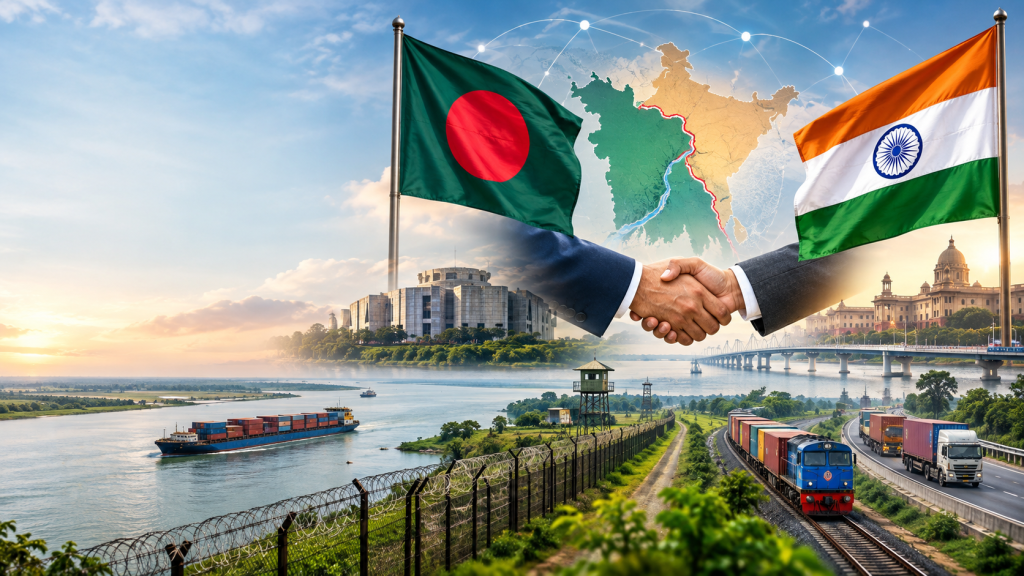
More recently, Bangladesh’s State Minister for Foreign Affairs Humaiun Kobir said Dhaka wanted to “reset” its relationship with India and pursue a working bilateral relationship through direct discussions.
However, a reset does not mean that existing disputes have disappeared.
The Ganges Water Sharing Treaty is approaching its 2026 expiry date, while Bangladesh continues to raise concerns about equitable water-sharing, including the Teesta. Border incidents, trade imbalances, extradition-related questions and the political status of former Prime Minister Sheikh Hasina in India remain part of the broader diplomatic conversation.
This article examines the major dimensions of Bangladesh India relations 2026 and explains why the relationship matters for Bangladesh’s present politics and foreign policy.
Bangladesh India Relations 2026 at a Glance
Several major issues currently define the relationship:
- Border security and border killings
- Cross-border migration and “push-in” allegations
- Trade and the bilateral trade deficit
- Transit and connectivity
- Ganges water-sharing
- The unresolved Teesta issue
- Energy and economic cooperation
- Regional security
- Visa and consular services
- The political status of former Prime Minister Sheikh Hasina
- Bangladesh’s broader foreign-policy balancing
- The future of bilateral diplomatic mechanisms
The relationship therefore cannot be reduced to a single issue.
Instead, Bangladesh-India relations involve a network of interconnected economic, environmental, security and political interests.
1. Why Bangladesh-India Relations Matter
Geography makes Bangladesh and India permanent neighbours.
India surrounds Bangladesh on three sides, while Bangladesh provides an important geographic link between India’s northeastern states and the Bay of Bengal. The two countries also share rivers, transport routes and a border extending more than 4,000 kilometres.
India’s Ministry of Home Affairs lists the Bangladesh-India international border at approximately 4,096.7 kilometres, running through West Bengal, Assam, Meghalaya, Tripura and Mizoram.
This geography creates both opportunities and challenges.
Opportunities include:
- Cross-border trade
- Road and rail connectivity
- Inland waterways
- Energy cooperation
- Regional supply chains
- Tourism
- Cultural exchange
- Security cooperation
- Access to wider South Asian markets
Challenges include:
- Border crime
- Smuggling
- Illegal crossings
- Border deaths
- Water management
- Migration disputes
- River erosion
- Trade imbalance
- Political disagreements
For Bangladesh, relations with India therefore have consequences far beyond traditional diplomacy.
2. The Political Background of Bangladesh-India Relations
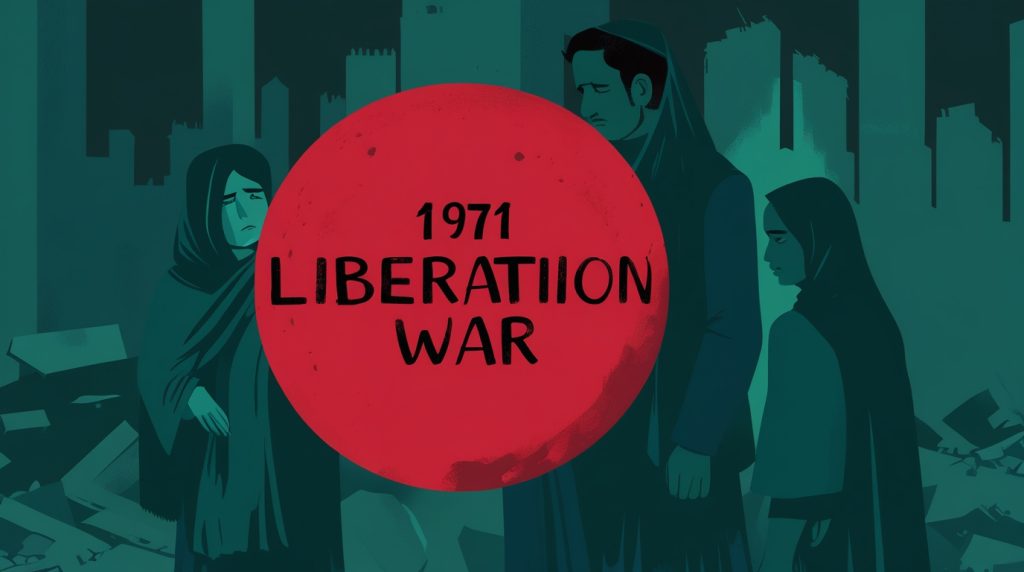
Bangladesh-India relations have experienced different phases since Bangladesh became independent in 1971.
The relationship improved significantly in several areas during the 2010s, particularly in connectivity, security cooperation and economic engagement. The two countries also resolved their long-standing land boundary issue through the 2015 Land Boundary Agreement implementation process.
However, political developments in Bangladesh after 2024 changed the environment.
Following the fall of Sheikh Hasina’s government in August 2024, relations entered a more difficult phase. The interim government and India maintained diplomatic contacts, but several contentious issues became more prominent.
The political transition following Bangladesh’s February 2026 election created another opportunity for bilateral engagement.
By May 2026, India said it was working to reactivate bilateral mechanisms with Bangladesh. Indian Foreign Secretary Vikram Misri said the two sides had more than 40 institutional mechanisms dealing with areas including water, trade, border management, security, connectivity and consular matters.
This is important because a stable bilateral relationship depends not only on leaders but also on functioning institutions.
3. Is Bangladesh-India Relations Heading Toward a Reset?
The word “reset” has become increasingly important in the 2026 discussion.
A reset does not necessarily mean that Bangladesh and India agree on every issue. Rather, it can mean restoring regular communication, rebuilding diplomatic confidence and creating mechanisms for negotiating disagreements.
In April 2026, reports described renewed engagement involving energy, visas and security cooperation.
In August, Prime Minister Tarique Rahman told India’s new High Commissioner Dinesh Trivedi that a conducive environment was necessary for improving bilateral relations.
In September, Bangladesh’s State Minister for Foreign Affairs said Dhaka wanted to move toward a new relationship with India based on bilateral discussions.
At the same time, analysts have pointed to unresolved issues that could complicate the process.
These include:
- Water-sharing
- Border management
- Trade
- Extradition
- Visa services
- Political trust
- Security concerns
Therefore, the current phase can best be understood as an attempt to rebuild engagement while major disagreements remain unresolved.
4. Border Management: One of the Most Sensitive Issues
Border management is one of the most difficult components of Bangladesh India relations 2026.
The shared border is extremely long and includes densely populated areas, rivers, agricultural land and difficult terrain.
Both countries have legitimate security concerns.
India focuses on issues such as:
- Cross-border crime
- Smuggling
- Illegal crossings
- Human trafficking
- Security threats
- Activities of armed groups
Bangladesh, meanwhile, has repeatedly raised concerns about:
- Border killings
- Alleged forced push-ins
- Treatment of Bangladeshi nationals
- Border fencing
- Cross-border incidents
The two countries nevertheless maintain institutional mechanisms for managing these problems.
In June 2026, senior officials from the Border Security Force and Border Guard Bangladesh held their 57th Director General-level border conference. They agreed to strengthen coordinated patrols, information sharing and cooperation against trans-border criminal networks.
This demonstrates an important characteristic of the relationship: political disagreements can coexist with operational cooperation.
5. Border Killings and Public Opinion
Border deaths are particularly sensitive in Bangladesh because they can quickly become a major public and political issue.
Even when governments maintain diplomatic communication, incidents involving deaths at the border can generate criticism from political parties, civil society organizations and ordinary citizens.
The challenge for both countries is therefore not simply preventing illegal activity.
It is also ensuring that border enforcement follows agreed procedures and that disputes are addressed quickly through established mechanisms.
Better communication between border forces can reduce misunderstandings.
At the same time, transparency and accountability in investigating serious incidents can influence public confidence in bilateral relations.
6. Trade Between Bangladesh and India
Economic relations remain one of the strongest practical foundations of Bangladesh-India relations.
India is a major source of imports for Bangladesh, while Bangladesh exports a range of products to the Indian market.
However, the trade relationship is significantly imbalanced.
Recent Bangladeshi data reported by bdnews24 indicated that Bangladesh’s exports to India were about $1.75 billion in FY2025-26, while the country’s trade deficit with India remained above $12 billion. Other parliamentary figures cited total bilateral trade at nearly $13 billion, illustrating the scale of the commercial relationship.
This imbalance has become part of Bangladesh’s political debate.
The question is not simply whether Bangladesh should trade with India.
The broader questions are:
- How can Bangladesh increase exports to India?
- Can non-tariff barriers be reduced?
- Can customs procedures become faster?
- Can Bangladeshi products gain greater market access?
- Can bilateral trade become more balanced?
- How can connectivity reduce transportation costs?
These are economic questions, but they also have political consequences.
7. Bangladesh’s Export Opportunities in India
Bangladesh has potential export opportunities in sectors such as:
- Ready-made garments
- Jute products
- Leather
- Pharmaceuticals
- Processed food
- Light engineering
- Ceramics
- Plastics
- Shipbuilding
- Information technology services
Bangladesh’s Commerce Ministry has identified several sectors, including leather, jute, shipbuilding, light engineering and semiconductors, as areas where export capacity could be increased.
For Bangladesh, improving exports could help reduce the perception that bilateral economic relations primarily benefit one side.
A more diversified trade relationship could also make the political relationship more resilient.
8. Connectivity and Transit
Bangladesh and India have geographic advantages that could support regional connectivity.
Possible areas include:
- Road transport
- Railways
- Inland waterways
- Ports
- Coastal shipping
- Energy transmission
- Digital connectivity
For India, Bangladesh can provide important access to the Bay of Bengal and routes toward India’s northeastern states.
For Bangladesh, connectivity can generate:
- Transit revenue
- Investment
- Logistics development
- Employment
- Regional trade opportunities
However, connectivity agreements also generate political debate.
A central question is whether Bangladesh receives sufficient economic benefits from allowing transit and connectivity facilities.
The answer depends on the specific agreement, pricing structure, infrastructure investment, customs arrangements and actual utilization.
9. Water-Sharing: The Most Persistent Structural Challenge
Water-sharing is arguably one of the most technically complicated areas of Bangladesh-India relations.
Bangladesh and India share numerous rivers.
Because many of these rivers originate upstream in India before flowing into Bangladesh, decisions made upstream can have significant effects downstream.
The issue becomes particularly important during the dry season.
10. The Ganges Water Sharing Treaty
The 1996 Ganges Water Sharing Treaty is one of the most important agreements between the two countries.
According to Bangladesh’s Joint Rivers Commission, the treaty was signed in 1996 for 30 years and provides for water sharing during the January-May period. The current treaty expires in 2026.
This makes 2026 a particularly important year for bilateral water diplomacy.
Bangladesh has already sought discussions on the treaty’s future.
According to The Daily Star, Bangladesh sent a letter to India in June proposing talks and was awaiting India’s response in August.
The expiry of the treaty creates both a challenge and a diplomatic opportunity.
A successful negotiation could establish a framework for longer-term water management.
Failure to reach an understanding could add another source of tension.
11. The Teesta Water-Sharing Issue
The Teesta River is another major issue in Bangladesh-India relations.
Unlike the Ganges treaty, there is no final bilateral water-sharing agreement on the Teesta.
The issue has remained politically sensitive for years.
Bangladesh argues that a predictable and equitable allocation is important for agriculture, fisheries, river ecosystems and livelihoods in its northern regions.
India’s internal federal structure also matters because water-related decisions involve the interests of states, particularly West Bengal.
In September 2026, Bangladesh’s President called for effective measures to ensure a fair share of waters from common rivers, specifically mentioning the Ganges and Teesta.
Thus, water diplomacy remains central to the future of Bangladesh India relations 2026.
12. Why Water Matters Beyond Politics
Water-sharing is not simply a diplomatic disagreement.
It affects:
- Agriculture
- Food security
- Fisheries
- River ecosystems
- Rural livelihoods
- Navigation
- Groundwater
- Climate resilience
Climate change adds another layer of complexity.
Changes in rainfall patterns, glacier and snow dynamics, river flows and extreme weather can make traditional water-sharing arrangements more difficult to manage.
Future agreements may therefore need stronger data-sharing and scientific cooperation in addition to political negotiations.
13. Regional Security Cooperation
Bangladesh and India have significant shared security interests.
Both countries have an interest in preventing:
- Terrorism
- Human trafficking
- Drug trafficking
- Arms smuggling
- Cross-border organized crime
- Extremist networks
India also has strategic interests connected with its northeastern states.
Bangladesh’s geographic position makes security cooperation important for both sides.
Border officials in 2026 discussed intelligence sharing, coordinated patrols and cooperation against trans-border criminal networks.
Security cooperation therefore remains one of the areas where practical collaboration can continue even when political relations are difficult.
14. The Rohingya Crisis and Regional Diplomacy
The Rohingya crisis is another regional issue where Bangladesh’s relations with neighbouring countries matter.
Bangladesh hosts a large Rohingya refugee population and has repeatedly sought international support for a sustainable solution.
India has its own security, humanitarian and regional interests regarding Myanmar.
Although the Rohingya issue is not strictly a Bangladesh-India bilateral dispute, Dhaka’s relations with New Delhi can influence broader regional diplomacy.
Cooperation among South Asian countries could potentially contribute to:
- Humanitarian assistance
- Regional stability
- Border security
- Myanmar diplomacy
- Economic connectivity
15. The Sheikh Hasina Issue
One of the most politically sensitive questions in Bangladesh India relations 2026 concerns former Prime Minister Sheikh Hasina.
Hasina has remained in India since the political upheaval of August 2024.
Bangladesh has sought her extradition, while India has said that the request is being examined under its legal and judicial procedures.
The issue has become a major point of political disagreement.
Bangladesh’s current government views the matter through the lens of its legal proceedings and domestic political transition.
India, meanwhile, has emphasized its legal procedures regarding the extradition request.
The dispute demonstrates how domestic political questions can become part of bilateral diplomacy.
16. Why the Hasina Issue Affects Bilateral Relations
The issue has consequences beyond the legal question itself.
It can influence:
- Diplomatic trust
- High-level visits
- Political communication
- Public opinion
- Security cooperation
- Domestic political narratives
In August 2026, Prime Minister Tarique Rahman raised the need for a conducive environment for stronger bilateral relations while also urging India to expedite consideration of Bangladesh’s extradition request.
This illustrates the complexity of the relationship: cooperation in one area can proceed while disagreement remains in another.
17. Diplomacy and the Search for a New Working Relationship
Diplomatic channels are particularly important during periods of political uncertainty.
In 2026, both governments have indicated an interest in restoring regular engagement.
India has said it is reactivating bilateral mechanisms, while Bangladesh has emphasized direct dialogue.
This approach is significant because bilateral relations involve dozens of technical subjects.
For example:
- Water experts need water negotiations.
- Border forces need security meetings.
- Trade officials need commercial negotiations.
- Transport authorities need connectivity discussions.
- Foreign ministries need political dialogue.
No single summit can resolve all of these matters.
Institutional diplomacy is therefore essential.
18. Bangladesh’s Foreign Policy Debate
The relationship with India has also become part of Bangladesh’s broader foreign-policy debate.
One side of the discussion emphasizes the importance of maintaining close relations with the country’s largest neighbour.
Another perspective stresses the need for greater strategic autonomy and balanced relations with multiple countries.
These positions do not necessarily require Bangladesh to choose between India and other partners.
Bangladesh has important relationships with:
- China
- The United States
- Japan
- European countries
- ASEAN members
- Gulf countries
- Other South Asian states
A diversified foreign policy can involve cooperation with multiple partners simultaneously.
The practical question is how Bangladesh can protect its national interests while maintaining constructive relationships across different geopolitical groupings.
19. China and the India-Bangladesh Relationship
China’s growing economic and strategic role in South Asia is another factor in the regional environment.
Bangladesh has extensive economic engagement with China, including trade and infrastructure cooperation.
India naturally pays attention to developments in its neighbourhood, while Bangladesh has an interest in maintaining flexibility in its foreign relations.
This does not mean Bangladesh-India relations must become a zero-sum competition between India and China.
For Bangladesh, the central question is whether different partnerships can be used to support:
- Infrastructure
- Investment
- Trade
- Technology
- Energy
- Industrial development
without unnecessarily turning economic cooperation into geopolitical confrontation.
20. The Role of Domestic Politics
Bangladesh-India relations have become increasingly connected to domestic political debate.
Political parties and citizens may interpret bilateral issues differently.
For example:
On trade
One perspective emphasizes the benefits of imports, connectivity and market access.
Another focuses on Bangladesh’s large trade deficit.
On security
One perspective highlights India’s security concerns and the need for cooperation.
Another emphasizes sovereignty and the protection of Bangladeshi citizens.
On water
One side stresses the need for equitable downstream flows.
Another emphasizes the technical and political complexity of managing shared rivers.
On diplomacy
Some argue for closer cooperation.
Others emphasize greater diplomatic reciprocity and strategic autonomy.
These competing perspectives are part of a normal foreign-policy debate.
21. Public Perception Matters
Government-to-government diplomacy is only one component of international relations.
Public opinion also matters.
A bilateral agreement may be technically sound but politically difficult if citizens believe that its benefits are unequal.
This is particularly relevant for:
- Water-sharing
- Border management
- Trade
- Transit
- Energy
- Security cooperation
For this reason, transparency can be important.
Governments can strengthen public confidence by explaining:
- What an agreement contains
- What Bangladesh receives
- What India receives
- What implementation mechanisms exist
- How disputes will be handled
- What measurable benefits are expected
22. The Importance of Reciprocity
The concept of reciprocity is increasingly important in discussions about Bangladesh India relations 2026.
Reciprocity does not necessarily mean that every agreement must provide identical benefits to both countries.
Rather, it means that both sides should perceive the relationship as serving legitimate national interests.
For Bangladesh, this could involve:
- Greater export access
- Fair water arrangements
- Predictable border management
- Easier legitimate travel
- Better transit benefits
- Energy cooperation
- Respect for sovereignty
For India, priorities can include:
- Border security
- Counterterrorism cooperation
- Trade
- Transit
- Regional connectivity
- Stability in India’s northeast
- Prevention of cross-border crime
A durable relationship needs mechanisms that allow these interests to coexist.
23. What a Practical Reset Could Look Like
A meaningful reset would probably require more than political statements.
Several practical steps could contribute to improved relations.
1. Restore regular bilateral mechanisms
Technical committees and ministerial meetings can address individual problems before they become political crises.
2. Advance water negotiations
The Ganges treaty’s 2026 expiry makes water diplomacy especially urgent.
3. Improve border communication
Regular communication between BGB and BSF can help prevent local incidents from escalating.
4. Expand trade opportunities
Bangladesh could seek improved market access while India could benefit from a stronger Bangladeshi consumer and industrial market.
5. Increase transparency
Clear public communication can reduce misinformation and political speculation.
6. Separate technical cooperation from political disputes
Trade, water and security cooperation can continue even when leaders disagree over politically sensitive matters.
7. Strengthen institutional diplomacy
The relationship should depend less on personal relationships between individual leaders and more on durable institutions.
24. The Future of Water Diplomacy
Water may become one of the most important tests of Bangladesh India relations in the coming years.
The Ganges treaty is scheduled to expire in 2026, making negotiations particularly significant.
A future agreement could potentially incorporate:
- Long-term water allocation
- Better hydrological data sharing
- Climate-change projections
- Dry-season flow management
- Flood forecasting
- River restoration
- Joint environmental monitoring
The most sustainable approach would likely require cooperation between diplomats, engineers, environmental scientists, agricultural experts and local stakeholders.
25. Economic Relations Could Become a Stabilizing Force
Economic interdependence can provide incentives for political stability.
If bilateral trade expands, businesses on both sides gain an interest in predictable relations.
Potential areas include:
- Pharmaceuticals
- Textiles
- Food processing
- Electronics
- Logistics
- Renewable energy
- IT services
- Manufacturing
- Tourism
Bangladesh’s exports to India increased in the first two months of FY2026-27 according to Export Promotion Bureau data reported in September, although the overall trade imbalance remained substantial.
This suggests that political tensions do not automatically eliminate economic interaction.
26. Visa and People-to-People Relations
People-to-people contact is another important part of the relationship.
Bangladeshis travel to India for:
- Medical treatment
- Education
- Tourism
- Business
- Family visits
Indian citizens also travel to Bangladesh for:
- Business
- Tourism
- Cultural activities
- Professional purposes
Changes in visa procedures can therefore have immediate effects on ordinary people.
A predictable visa system can support economic activity and cultural connections while reducing unnecessary friction.
27. Why Institutional Stability Matters
One lesson from the current relationship is that bilateral diplomacy cannot depend entirely on individual political leaders.
Governments change.
Foreign-policy priorities change.
Domestic political circumstances change.
But rivers continue to flow, borders remain in place and businesses continue to need predictable commercial rules.
Institutional mechanisms can provide continuity through political transitions.
This is why the reported effort to reactivate bilateral mechanisms in 2026 is significant.
28. Bangladesh India Relations 2026: Major Issues Compared
| Issue | Bangladesh’s Key Interest | India’s Key Interest | Current Situation |
|---|---|---|---|
| Border | Safety, sovereignty, fewer deaths | Security and crime prevention | Cooperation continues but disputes remain |
| Trade | More exports and reduced barriers | Access to Bangladeshi market | Strong trade but major imbalance |
| Ganges | Predictable dry-season water | Water management upstream | Treaty expires in 2026 |
| Teesta | Equitable water allocation | Internal political and federal considerations | No final agreement |
| Security | Border stability | Counterterrorism and border security | Institutional cooperation continues |
| Connectivity | Economic benefit and transit revenue | Access to northeast and regional routes | Cooperation remains important |
| Visas | Easier legitimate travel | Consular and security management | Part of ongoing diplomatic engagement |
| Extradition | Legal and political concerns | Legal/judicial procedures | Remains unresolved |
| Diplomacy | Reciprocity and national interests | Stable bilateral relationship | Attempts at renewed engagement |
29. What Could Improve Bangladesh-India Relations?
Several developments could help stabilize the relationship.
Greater political communication
Regular high-level dialogue can prevent misunderstandings from becoming prolonged diplomatic disputes.
Faster technical negotiations
Water, trade and border issues often require technical discussions rather than political rhetoric.
Better border coordination
Improved communication between border forces can help prevent local incidents from escalating.
More balanced economic cooperation
Increasing Bangladeshi exports could make the economic relationship more politically sustainable.
Long-term water planning
The Ganges and Teesta questions require solutions that account for climate change and future water demand.
Institutional continuity
Permanent bilateral mechanisms can reduce dependence on individual leaders.
30. What Could Make Relations More Difficult?
Several factors could continue to create tension.
Domestic political polarization
If bilateral issues become tools of domestic political competition, compromise can become more difficult.
Water disputes
The approaching expiry of the Ganges treaty makes the water question especially important.
Border incidents
Deaths, alleged push-ins and other incidents can rapidly generate public anger.
Trade imbalance
A persistent and very large trade deficit can reinforce perceptions of unequal economic relations.
Political disagreements
The issue surrounding Sheikh Hasina remains sensitive and can affect broader diplomatic engagement.
Regional geopolitical competition
Increasing competition among major powers in South Asia could make foreign-policy choices more complicated.
31. A More Balanced Framework for Bangladesh’s India Policy
A sustainable Bangladesh policy toward India does not necessarily have to be based on either unconditional closeness or permanent confrontation.
A third approach is possible: issue-based engagement.
Under such an approach, Bangladesh could cooperate with India where interests overlap while firmly negotiating where interests differ.
For example:
- Cooperate on border security.
- Negotiate firmly on water.
- Expand mutually beneficial trade.
- Maintain diplomatic dialogue.
- Protect national sovereignty.
- Continue relations with China, Japan, the United States and other partners.
- Use international law and bilateral agreements when disputes arise.
This approach treats foreign policy as a collection of specific interests rather than a single all-or-nothing relationship.
32. What Bangladesh Can Gain From Stable Relations
A stable relationship with India could support:
- Lower transportation costs
- Greater regional connectivity
- More export opportunities
- Energy cooperation
- Cross-border investment
- Better border security
- Easier legitimate travel
- Environmental cooperation
- Regional economic integration
At the same time, Bangladesh needs to ensure that these benefits are compatible with its economic and national interests.
33. What India Can Gain From Stable Relations
India also has substantial interests in stable relations with Bangladesh.
These include:
- A more secure northeastern region
- Better connectivity
- Trade opportunities
- Energy cooperation
- Regional stability
- Cooperation against transnational crime
- Access to Bay of Bengal routes
- Stronger South Asian economic integration
Consequently, the relationship has significant strategic value for both countries.
34. The Role of International Law and Bilateral Agreements
Long-term stability requires disagreements to be managed through recognized legal and diplomatic mechanisms.
This is particularly important for:
- Water-sharing
- Border management
- Extradition
- Trade
- Transit
- Maritime and river issues
International law does not automatically solve political disagreements.
But it provides frameworks through which disputes can be negotiated.
For Bangladesh, maintaining a rules-based approach can help ensure that bilateral negotiations are conducted within predictable legal parameters.
35. The Road Ahead for Bangladesh India Relations 2026
The current relationship contains two apparently contradictory trends.
On one side, there is renewed diplomatic engagement.
Both governments have shown interest in restoring communication and reviving bilateral mechanisms.
On the other side, several difficult issues remain unresolved.
These include water-sharing, border concerns, trade imbalance and politically sensitive questions involving former Prime Minister Sheikh Hasina.
This means that the future relationship will depend less on diplomatic slogans and more on whether practical progress can be made.
36. Conclusion
Bangladesh India relations 2026 are entering a potentially important period.
The two countries remain deeply connected by geography, history, economics, rivers and security interests. Neither country can easily ignore the other.
At the same time, the relationship is facing serious challenges.
Border management remains sensitive. Trade is substantial but heavily imbalanced. Water-sharing remains unresolved in important areas, while the Ganges Water Sharing Treaty reaches its 2026 expiry point. The Teesta question remains unsettled. Political disagreements, including the issue surrounding former Prime Minister Sheikh Hasina, continue to influence diplomatic trust.
Recent statements from Dhaka indicate an interest in resetting relations through direct bilateral engagement. India has also indicated a willingness to reactivate institutional mechanisms.
The most important question is therefore not whether Bangladesh and India will agree on everything.
They almost certainly will not.
The more practical question is whether the two countries can develop institutions and negotiating mechanisms capable of managing disagreement while expanding areas of mutual benefit.
A stable Bangladesh-India relationship would not require the disappearance of differences. It would require the ability to manage those differences through diplomacy, law, evidence, negotiation and institutional cooperation.
For Bangladesh, the challenge is to protect national interests while maintaining constructive relations with its largest neighbour. For India, the challenge is to address Bangladesh’s concerns while protecting its own security and economic interests.
The future of the relationship will ultimately depend on how effectively both sides turn diplomatic engagement into concrete results.
Frequently Asked Questions
What is the current status of Bangladesh India relations in 2026?
Bangladesh and India are attempting to restore and strengthen bilateral engagement, but several significant issues remain unresolved. Recent discussions have focused on rebuilding diplomatic communication, while water-sharing, border issues, trade, extradition and political trust remain important challenges.
Why are Bangladesh and India discussing a reset in 2026?
The relationship experienced significant strain following Bangladesh’s political transition in 2024. In 2026, both sides have shown interest in restoring bilateral mechanisms and improving diplomatic engagement. Bangladesh has described the objective as establishing a new working relationship with India.
What is the biggest water issue between Bangladesh and India?
The Ganges Water Sharing Treaty is a major issue because the 1996 agreement reaches its 30-year expiry point in 2026. The Teesta water-sharing issue is also unresolved.
Why is the Teesta River important to Bangladesh?
The Teesta is important for agriculture, fisheries, river ecosystems and livelihoods, particularly in northern Bangladesh. Bangladesh has sought a more predictable and equitable arrangement for sharing its waters with India.
How long is the Bangladesh-India border?
India’s Ministry of Home Affairs lists the Bangladesh-India border at approximately 4,096.7 kilometres.
What are the major trade issues between Bangladesh and India?
Bangladesh’s major concerns include its large trade deficit with India, market access and non-tariff barriers. At the same time, bilateral trade provides Bangladesh with access to a large neighbouring market and India with an important regional trading partner. Recent Bangladeshi data show that exports to India continued during the period of diplomatic tension.
Does Bangladesh cooperate with India on security?
Yes. Border forces from both countries maintain institutional mechanisms covering coordinated patrols, information sharing and cooperation against trans-border criminal networks.
Why is Sheikh Hasina important to Bangladesh-India relations?
Former Prime Minister Sheikh Hasina has remained in India since the 2024 political transition. Bangladesh has sought her extradition, while India has said the request is being examined through its legal and judicial procedures. The issue has become an important point of diplomatic disagreement.
Can Bangladesh and India improve relations despite their disagreements?
Yes, improved relations do not require every disagreement to disappear. Regular diplomacy, functioning bilateral mechanisms, technical negotiations and agreements on practical issues can allow the two countries to cooperate while continuing to disagree on certain matters.