Exynos 2700: Expected Features, Performance, Technology, and What We Know So Far
Introduction
The smartphone processor market is becoming increasingly competitive, with manufacturers working to deliver faster performance, improved battery efficiency, better gaming graphics, and more powerful on-device artificial intelligence. Samsung’s Exynos family is an important part of this competition, and the Exynos 2700 is attracting attention as a potential next-generation flagship mobile chipset.
The processor is widely expected to be associated with Samsung’s future Galaxy S27 smartphone lineup. Reports have also discussed a more advanced manufacturing process and improvements to heat management. However, not every reported specification or performance figure has been confirmed by Samsung, so it is important to distinguish credible reporting from early leaks and speculation.
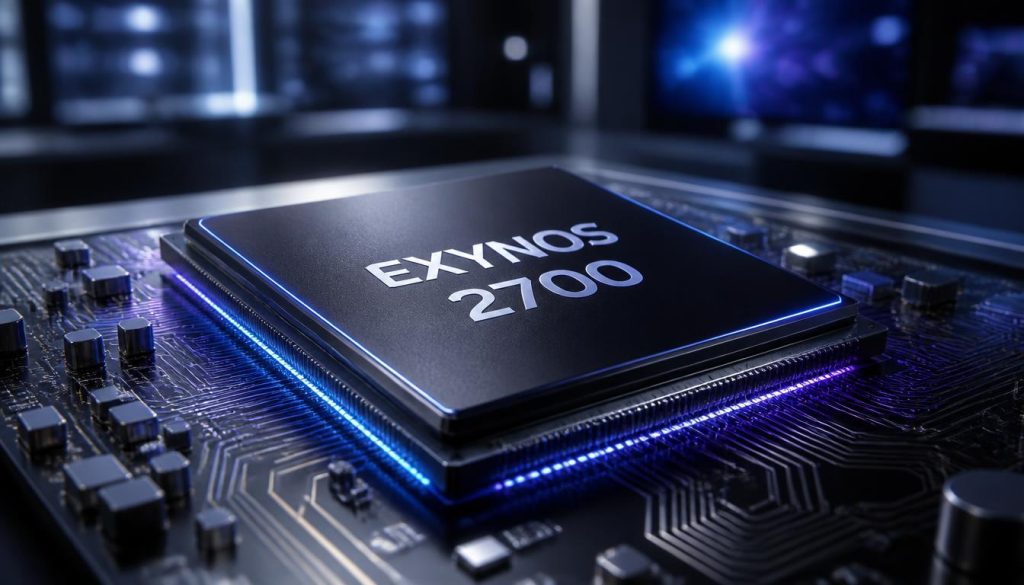
In this guide, we examine what is known about the Exynos 2700, what its reported features could mean for everyday users, how it may compare with competing processors, and what buyers should check before purchasing a phone powered by it.
Editorial note: This article distinguishes reported developments from confirmed product specifications. Features, benchmarks, regional availability, and launch details may change before a commercial device is released.
What Is the Exynos 2700?
The Exynos 2700 is the name associated with Samsung’s reported next-generation flagship smartphone processor. Like other modern mobile system-on-chips (SoCs), it is expected to combine processing components that handle general computing, graphics, AI workloads, and other smartphone functions.
Samsung’s Exynos processors compete with flagship chipsets from companies such as Qualcomm and MediaTek. These processors influence how quickly a phone opens applications, renders games, processes photographs, handles demanding multitasking, and performs certain AI-powered tasks.
Samsung’s development of the Exynos 2700 has received attention because the company is working to strengthen its position in advanced mobile chip design and manufacturing. In June 2026, industry coverage reported that a Samsung executive had acknowledged development of the processor for potential use in top-tier smartphones.
Why Does the Exynos 2700 Matter?
The chipset matters for three main reasons:
- Flagship performance: It is expected to target premium smartphones rather than entry-level devices.
- Power efficiency: Improvements in chip design and manufacturing could help balance performance with battery consumption.
- Competition: A stronger Exynos processor could give Samsung more flexibility in selecting processors for its flagship phones.
These are potential benefits, not guarantees. The actual experience will depend on the final chip design and how Samsung integrates it into a retail smartphone.
Exynos 2700 Specifications: What Is Reported?
The table below summarizes important details discussed in public reporting and separates them from information that still requires confirmation.
| Feature | Current information |
|---|---|
| Chipset name | Exynos 2700 |
| Manufacturer | Samsung Electronics |
| Product category | Expected flagship mobile SoC |
| Manufacturing process | Reportedly Samsung Foundry SF2P, a second-generation 2nm process |
| CPU configuration | A 10-core design has appeared in a reported benchmark listing; final configuration unconfirmed |
| GPU | Xclipse 970 mentioned in an early benchmark report |
| AI processing | Improvements are anticipated but final specifications are unconfirmed |
| Expected phone family | Samsung Galaxy S27 series, according to industry reports |
| Official retail launch date | Not confirmed in the sources reviewed |
| Final clock speeds | Not officially confirmed |
| Final power consumption | Not officially confirmed |
Important: A benchmark listing can provide clues about an engineering sample, but it does not establish the specifications of a finished commercial processor. The core configuration, GPU, clock speeds, and other details should be checked against Samsung’s final product announcement.
Expected Features of the Exynos 2700
1. Advanced 2nm Manufacturing Technology
One of the most important reported developments is the possible use of Samsung Foundry’s second-generation 2nm process, known as SF2P. Industry reporting has associated this manufacturing technology with the Exynos 2700.
Smaller manufacturing processes can help chip designers improve performance, reduce power consumption, or fit more functionality into a given chip area. However, the final result depends on chip architecture, manufacturing quality, and software optimization.
For everyday users, successful implementation could mean:
- Faster application processing.
- Better performance during demanding tasks.
- Potentially lower energy consumption for comparable workloads.
- More efficient use of the phone’s thermal limits.
These are potential benefits rather than verified Exynos 2700 results.
2. A Potentially Powerful Multi-Core CPU
A report published by Gadgets 360 in April 2026 described a Geekbench listing believed to be associated with the Exynos 2700. It showed a 10-core CPU configuration with different operating frequencies. The publication also cautioned that the processor was still under development and that the results might change.
If the final processor retains a similar design, multiple CPU cores could help with workloads that benefit from parallel processing.
For example, imagine editing a large photo while downloading files and keeping several applications open. A capable CPU can distribute suitable workloads across its cores, helping the device remain responsive.
Nevertheless, core count alone does not determine speed. CPU architecture, scheduling, memory bandwidth, cooling, and software optimization also matter.
3. Graphics Performance and Mobile Gaming
Graphics processing is another important area to watch. The early benchmark report identified an Xclipse 970 GPU, although Samsung has not established the final commercial specifications in the sources reviewed.
A strong GPU could benefit users who play demanding mobile games, edit videos, or use applications with advanced visual effects.
Potential advantages worth testing include:
- Stable frame rates during long gaming sessions.
- Better rendering of complex 3D environments.
- Improved support for advanced lighting and graphics effects.
- Faster GPU-assisted creative workloads.
However, a reported GPU name does not prove how well the chip performs in actual games. Testing on a finished phone will be necessary to evaluate frame-rate consistency, graphics quality, and heat.
4. AI Processing and On-Device Features
Modern flagship processors increasingly include specialized hardware for artificial intelligence. These components can accelerate tasks such as image recognition, speech processing, photo enhancement, and certain generative AI features.
The Exynos 2700 may continue this trend, but its final neural processing unit specifications and AI performance have not been confirmed in the sources reviewed.
Consider a practical example: a smartphone could use local AI processing to recognize objects in a photograph or assist with voice transcription. The speed and availability of these features would depend on the processor, the operating system, the application, and the AI model.
Buyers should look for independently tested AI performance rather than assuming that a newer chipset automatically supports every advanced AI feature.
5. Improved Thermal Management
Heat management is particularly important in powerful smartphones. A processor might deliver impressive short bursts of speed but reduce its performance if temperatures rise during extended workloads.
Reports about the Exynos 2700 have discussed a Heat Path Block and other thermal-management improvements. These details should be treated as reported design information until Samsung confirms the final implementation.
If the design successfully moves heat away from critical components, users could benefit from more consistent performance while gaming, recording video, or running demanding applications.
The key question is not simply whether the processor becomes hot. It is whether the complete phone can sustain useful performance without excessive heat or battery drain.
Exynos 2700 Performance: What Should Users Expect?
It is too early to provide a reliable final performance rating for the Exynos 2700. Early benchmark results represent specific test conditions and may not reflect a production phone.
Here is how to evaluate its performance when more evidence becomes available.
| Performance area | What to examine |
|---|---|
| CPU speed | Single-core and multi-core benchmark results |
| Gaming | Average frame rates and stability over time |
| Battery efficiency | Energy consumption during comparable workloads |
| Thermal behavior | Temperature and performance after extended use |
| AI capabilities | Tested AI workloads and supported features |
| Connectivity | Confirmed modem, network bands, and regional support |
Understanding Benchmark Scores
An early Geekbench 6 listing reported a score of 2,603 for single-core performance and 10,350 for multi-core performance for a device believed to use the Exynos 2700. These are preliminary figures, not verified retail-device results.
A benchmark score is useful only when the testing context is understood.
For example, a processor with a higher multi-core score may perform better in certain parallel workloads, but that does not necessarily mean it opens every application faster or lasts longer on battery power.
A fair comparison should use the same benchmark version, similar software conditions, and finished devices tested under comparable circumstances.
Exynos 2700 vs Snapdragon: Which Could Be Better?
The Exynos 2700 is expected to compete with flagship Snapdragon processors, but declaring a winner before comparable retail-device tests would be premature.

Samsung Exynos 2700
Reported next-generation Samsung flagship chipset
The main points to watch are manufacturing technology, sustained performance, thermal behavior, and regional Galaxy phone availability.

Qualcomm Snapdragon flagship series
Competing premium mobile processors
Compare the specific Snapdragon model used in the same generation of phones, rather than relying on a brand-wide performance assumption.
CPU and Everyday Performance
Both platforms can offer fast application launches, responsive multitasking, and demanding computing capabilities. The meaningful comparison will be between specific chips running on actual devices.
Gaming and Graphics
Gaming performance depends on the GPU, game optimization, graphics drivers, cooling, and power limits. Check long-session gaming tests instead of relying solely on a synthetic graphics score.
Battery Life and Heat
A more efficient chip can improve battery life, but screen brightness, mobile signal strength, battery capacity, and background applications also affect endurance.
Verdict: The Exynos 2700 could become a competitive flagship processor, but no definitive Exynos-versus-Snapdragon winner can be established from preliminary information alone.
Will the Exynos 2700 Power the Samsung Galaxy S27?
The Galaxy S27 family is the most frequently reported destination for the Exynos 2700.
An October 2026 report from The Elec stated that Samsung had started full-scale production and that the processor was expected in the Galaxy S27, S27 Plus, and a reported S27 Pro model in certain regions. The same report said the chipset decision for the S27 Ultra remained unresolved at that time.
These are industry-source reports, not a complete official retail lineup announcement.
Before buying a future Galaxy phone, check:
- The exact model and regional variant.
- Whether the device uses Exynos or Snapdragon.
- The final RAM and storage configurations.
- Network compatibility in your country.
- Official warranty and software-support terms.
This is particularly important for international buyers because the same Galaxy model family can have different hardware configurations in different markets.
How to Decide Whether an Exynos 2700 Phone Is Worth Buying
If a smartphone with the Exynos 2700 becomes available, use the following practical guide to evaluate it.
Step 1: Verify the official specifications
Check Samsung’s official product announcement and the manufacturer’s specifications for the exact phone. Do not rely exclusively on leaked specification tables.
Step 2: Review independent benchmarks
Look for multiple reviews using the same benchmark versions. Pay attention to both short tests and sustained performance.
Step 3: Check real-world gaming results
If you play games regularly, examine frame-rate consistency, temperature, battery drain, and performance after 20–30 minutes or longer.
Step 4: Compare efficiency and battery endurance
Compare complete phones under similar conditions. A processor’s manufacturing process alone cannot establish how long the battery will last.
Step 5: Confirm local availability and value
Compare the actual retail price, regional chipset, warranty, connectivity, and software support before deciding whether the phone is worth buying.
Example: Choosing a Phone for Gaming
Suppose two future flagship phones have similar prices, but one uses the Exynos 2700 and the other uses a competing Snapdragon chip.
Rather than selecting the phone with the highest advertised benchmark, compare sustained frame rates, heat after extended play, battery consumption, and the games you actually use. If one device maintains smoother gameplay with less power consumption, that may be more useful than a small difference in peak benchmark performance.
This is a hypothetical buying example, not a claim about tested Exynos 2700 devices.
Who Should Be Interested in the Exynos 2700?
The chipset is worth watching for several types of users.
- Flagship smartphone buyers: People considering a future premium Samsung Galaxy phone.
- Mobile gamers: Users interested in sustained graphics performance and thermal stability.
- Technology enthusiasts: Readers following semiconductor manufacturing and mobile processor competition.
- AI-focused users: People interested in on-device AI capabilities, subject to final hardware and software support.
- International buyers: Customers who want to understand differences between regional Galaxy variants.
For people who need a phone immediately, it is better to compare currently available devices rather than postpone a purchase solely because of an unannounced processor.
Frequently Asked Questions About Exynos 2700
1. What is the Exynos 2700?
The Exynos 2700 is Samsung’s reported next-generation flagship smartphone processor. Samsung has acknowledged its development in reporting, but a complete final retail specification sheet has not been established in the sources reviewed.
2. Is the Exynos 2700 officially confirmed?
Samsung executive-level acknowledgment of development has been reported. However, that should not be confused with confirmation of every leaked specification, benchmark result, or future phone configuration.
3. Will the Exynos 2700 use 2nm technology?
Industry reports associate the processor with Samsung Foundry’s second-generation 2nm SF2P process. The final commercial implementation should be checked against Samsung’s official specifications.
4. How fast is the Exynos 2700?
An early benchmark listing reported 2,603 single-core and 10,350 multi-core points in Geekbench 6.6.0. Those figures are preliminary and should not be treated as final performance measurements.
5. Is the Exynos 2700 better than Snapdragon?
There is not enough independently verified, comparable retail-device evidence to declare a winner. CPU performance, graphics, efficiency, heat, and modem capabilities must be compared separately.
6. Which phone will use the Exynos 2700?
The Samsung Galaxy S27 family is the leading reported candidate. The exact models and regional configurations require confirmation through official announcements and final product specifications.
7. Will the Exynos 2700 be good for gaming?
It could be suitable for demanding games if its final CPU, GPU, cooling, and software optimization deliver strong results. Independent testing of a production phone is needed to determine actual gaming performance.
8. Will the Exynos 2700 improve battery life?
Potentially, if the final chip offers better energy efficiency under comparable workloads. Actual battery life also depends on the phone’s battery capacity, display, connectivity, and software.
9. What is the price of the Exynos 2700?
There is no verified standalone retail price to provide. Smartphone processors are generally sold as components to device manufacturers, and consumers usually buy them as part of a complete phone.
10. Should I wait for an Exynos 2700 phone?
If you are planning to buy a premium Samsung phone and your current device works well, waiting for official specifications and independent reviews may be sensible. If you need a phone now, choose based on the performance, battery life, price, and support of devices already available.
Conclusion
The Exynos 2700 is an important development to watch in the next generation of Samsung mobile processors. Reports point toward advanced 2nm manufacturing technology, a possible 10-core CPU configuration, a new Xclipse GPU, and a potential role in the Galaxy S27 lineup.
However, leaked specifications and early benchmarks cannot guarantee the performance of a finished smartphone. The most useful measures will be sustained CPU and GPU speed, battery efficiency, thermal stability, AI capabilities, and the availability of the processor in different markets.
For now, the best approach is to follow official announcements and wait for independent testing before making firm judgments about the Exynos 2700. If Samsung delivers meaningful improvements across these areas, the chipset could strengthen competition in the flagship smartphone market.